


What's Happening?
Global financial markets experienced a downturn following President Trump's announcement of potential tariffs on goods imported from eight European countries. The tariffs, set to begin at 10% on February 1 and potentially rising to 25% by June 1, are
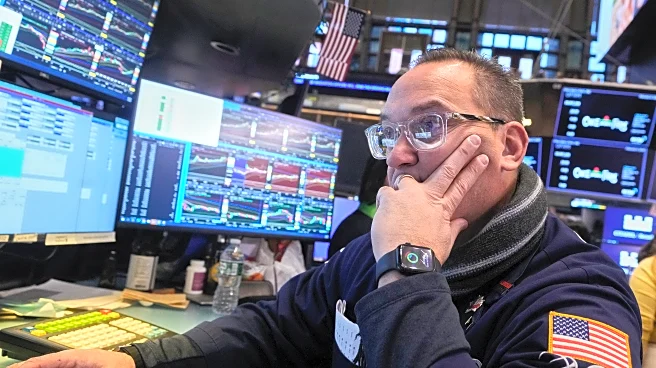
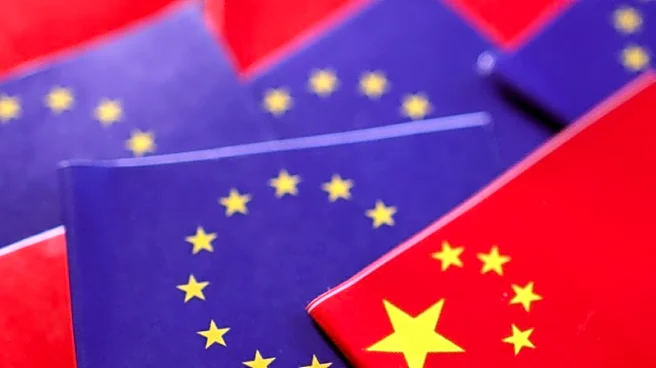
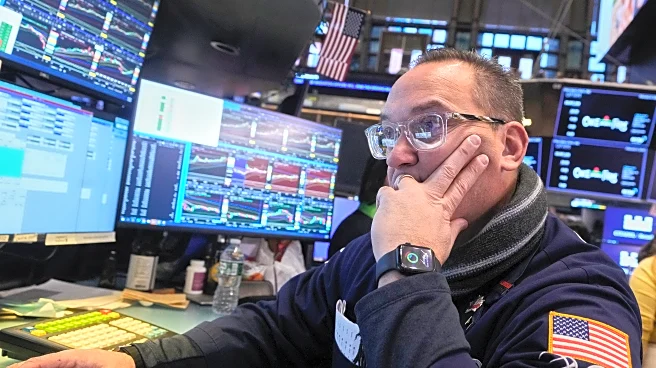
contingent on the U.S. being allowed to purchase Greenland. This announcement led to a decline in global stocks, with the STOXX 600 index in Europe falling by 0.9% and major indexes in Frankfurt, Paris, and London also experiencing losses. The U.S. markets were closed for Martin Luther King Jr. Day, but futures for the S&P 500 and Nasdaq dropped by 0.8% and 1.2%, respectively. The tariff threats have been condemned by major European Union states, with France proposing economic countermeasures. The EU's potential retaliation includes tariffs on $108 billion worth of U.S. goods and measures under an Anti-Coercion Instrument.
Why It's Important?
The tariff threats from President Trump could escalate into a trade war between the U.S. and Europe, potentially affecting global economic growth and demand. The financial markets' reaction indicates a shift towards risk-averse behavior, with investors seeking safe-haven assets like gold and silver, which have reached all-time highs. The proposed tariffs could disrupt existing trade agreements and lead to increased tensions between the U.S. and its European allies. This development is significant as it could impact various sectors, including manufacturing and exports, and influence global economic stability. The situation also highlights the ongoing use of tariffs as a tool in international negotiations, which could have long-term implications for global trade policies.
What's Next?
The upcoming World Economic Forum in Davos may serve as a platform for further discussions on the tariff threats, as global leaders, including a large U.S. delegation led by President Trump, gather to address international economic issues. The EU's response to the tariff threats will be closely watched, as it could involve implementing previously suspended tariffs on U.S. goods or exploring new economic measures. The financial markets will likely continue to react to developments in the tariff negotiations, with potential impacts on currency values and investor confidence. The situation underscores the importance of diplomatic engagement to resolve trade disputes and maintain economic stability.