



What's Happening?
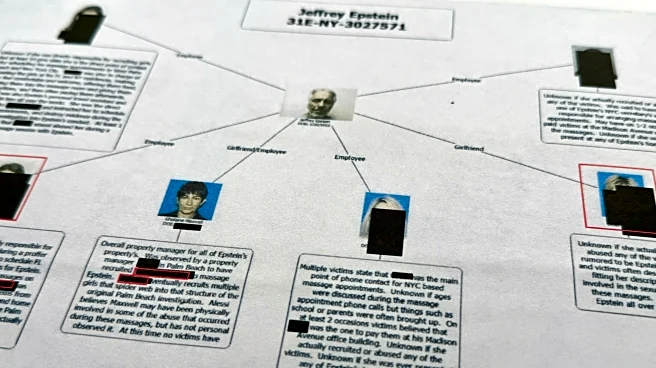
The Department of Justice has released thousands of files related to Jeffrey Epstein, following a congressional mandate. These documents, many of which are heavily redacted, include images and information about Epstein's activities. Notably, a photo of President
Trump was removed from the DOJ's online library, although he has not been accused of any wrongdoing in connection with Epstein. The redactions have drawn criticism from lawmakers, with some expressing concerns about transparency and the potential implications of the redacted content. The release of these files is part of ongoing efforts to provide public access to information about Epstein's criminal activities and associations.
Why It's Important?
The release of these files is significant as it represents a step towards transparency in the investigation of Jeffrey Epstein's criminal network. However, the heavy redactions and the removal of certain images, such as the one of President Trump, have raised questions about the extent of the information being withheld from the public. This situation highlights the challenges of balancing transparency with privacy and legal considerations in high-profile cases. The scrutiny from lawmakers and the public underscores the ongoing demand for accountability and full disclosure in matters involving public figures and criminal investigations.
What's Next?
The DOJ may face increased pressure from Congress and the public to provide more detailed explanations for the redactions and the removal of specific images. Lawmakers may push for further investigations or hearings to address these concerns and ensure that the public has access to all relevant information. The ongoing scrutiny could lead to additional legal and political challenges for the DOJ as it navigates the complexities of this high-profile case. The response from Epstein's survivors and their legal representatives will also be crucial in shaping the next steps in this ongoing saga.