






What's Happening?
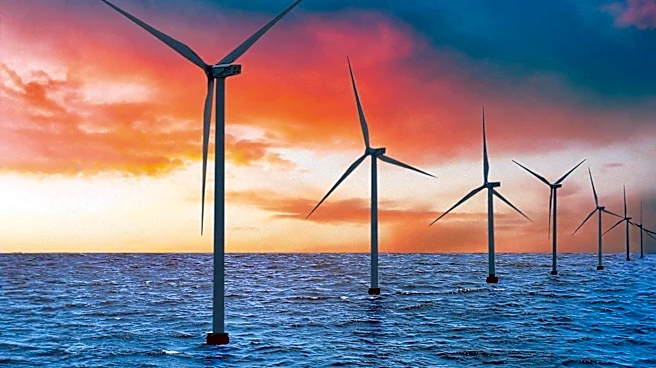
China has deployed the largest tension-leg floating offshore wind platform designed to hold a 16 MW turbine. Assembled at Gaolan Port in Zhuhai, the platform departed on June 28 for deployment in the South China Sea. Standing over 307 meters tall and weighing
nearly 8,000 tonnes, it is set to generate approximately 54 million kWh annually. This deployment is part of China's efforts to scale up and commercialize deep-sea floating offshore wind technology. Positioned near the Lufeng oilfield cluster, the turbine will provide power to the oil field's grid through subsea cables. This marks China's first integration of renewable energy into oil and gas operations.
Why It's Important?
The deployment of this floating offshore wind platform signifies China's leadership in the renewable energy sector, particularly in offshore wind power. With a total installed wind power generation capacity of 660 million kilowatts, China holds more than half of the global market in offshore wind power. This initiative not only boosts China's renewable energy capacity but also sets a precedent for integrating renewable energy into traditional oil and gas operations. The move could influence global energy strategies, encouraging other nations to adopt similar technologies to reduce carbon footprints and enhance energy sustainability.
What's Next?
China plans to add up to 63 GW of additional offshore power generation capacity, further solidifying its position in the global renewable energy market. The success of this deployment may lead to more commercial applications of deep-sea floating wind technology, potentially influencing energy policies worldwide. Stakeholders in the energy sector, including governments and private companies, may explore similar integrations of renewable energy into existing infrastructure, promoting a shift towards sustainable energy solutions.
Beyond the Headlines
The integration of renewable energy into oil and gas operations presents ethical and environmental implications. It highlights a shift towards more sustainable practices in traditionally high-carbon industries. This development could lead to long-term changes in energy production and consumption patterns, fostering a global transition to cleaner energy sources. Additionally, the technology's ability to withstand tropical cyclones in deep-sea environments may pave the way for further innovations in renewable energy infrastructure.