








What's Happening?
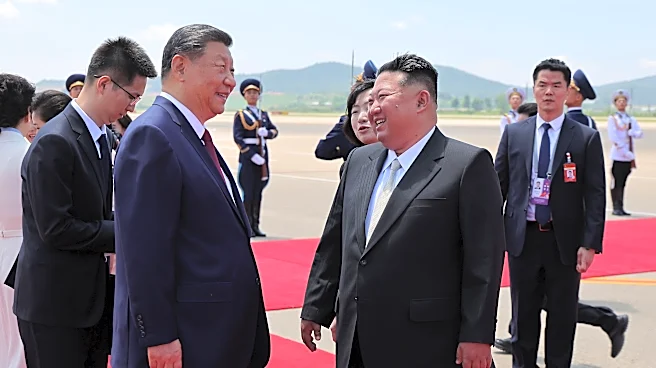
Chinese President Xi Jinping visited North Korea for the first time in seven years, marking a significant diplomatic engagement with North Korean leader Kim Jong-un. During the summit in Pyongyang, both leaders agreed to enhance cooperation in politics,
economy, and culture, signaling a new chapter in their bilateral relations. The visit coincided with the 65th anniversary of the China-North Korea friendship treaty. Xi emphasized the importance of strategic communication and high-level exchanges, while Kim expressed support for the 'One China principle,' which pertains to Taiwan. The summit included cultural performances and a banquet, underscoring the historical and cultural ties between the two nations. Analysts noted that the visit highlighted China's strategic importance to North Korea, especially as Pyongyang strengthens ties with Russia.
Why It's Important?
The summit between Xi Jinping and Kim Jong-un is significant as it reaffirms China's influence over North Korea amid shifting geopolitical dynamics. Strengthening ties with China could provide North Korea with economic and political support, especially as it faces international sanctions and seeks to diversify its alliances. For China, maintaining a strong relationship with North Korea is crucial for regional stability and as a counterbalance to U.S. influence in East Asia. The summit also reflects China's broader strategic interests in reinforcing its role as a key player in regional politics. The absence of discussions on denuclearization suggests a shift in focus towards economic and cultural cooperation, which could impact future diplomatic negotiations involving North Korea's nuclear program.
What's Next?
Following the summit, both countries are expected to pursue closer strategic communication and high-level exchanges. This could involve increased trade and tourism, as well as potential restoration of transport links. The emphasis on equal partnership and solidarity, particularly against U.S. and Taiwan-related issues, may lead to further diplomatic engagements. Observers will be watching for any developments in North Korea's foreign policy, especially regarding its nuclear program and relations with the United States. The summit's outcomes could influence future negotiations and the geopolitical landscape in the region.
Beyond the Headlines
The summit's focus on equal partnership and cultural ties highlights a shift in North Korea's diplomatic posture, aiming to project independence rather than dependency on China. This redefined relationship could alter the dynamics of international diplomacy in the region, as North Korea seeks to balance its alliances with China and Russia. The cultural and historical elements of the summit underscore the deep-rooted ties between the two nations, which could serve as a foundation for future cooperation. The absence of denuclearization discussions may indicate a strategic pivot towards economic development and cultural diplomacy.