
What's Happening?
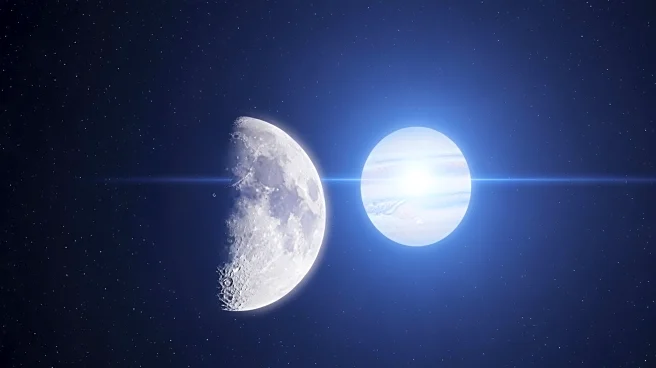
On the night of December 7, skywatchers will have the opportunity to observe Jupiter shining close to the waning gibbous moon. This celestial event will occur in the constellation Gemini, with the moon rising
approximately three hours after sunset. Jupiter will appear less than five degrees to the moon's upper right, making it a striking sight for both amateur and seasoned astronomers. The event will reach its peak in the early morning hours of December 8, when both celestial bodies will be nearly overhead in the southern sky. This alignment offers a chance to view Jupiter's cloud bands and its Galilean moons through a telescope.
Why It's Important?
Celestial events like the alignment of Jupiter and the moon provide valuable opportunities for education and public engagement with astronomy. Such events can inspire interest in space science and encourage people to explore the night sky. For educators and astronomers, it is a chance to share knowledge about the solar system and the dynamics of celestial bodies. This event also highlights the importance of preserving dark skies, free from light pollution, to allow for clear observations. Engaging the public in astronomy can lead to increased support for scientific research and space exploration initiatives.
What's Next?
Following this event, skywatchers can look forward to other astronomical phenomena, such as meteor showers and planetary alignments. Astronomy clubs and observatories may organize viewing events to capitalize on public interest. Additionally, advancements in telescope technology continue to make it easier for enthusiasts to explore the night sky. As interest in space grows, educational programs and resources are likely to expand, providing more opportunities for people to learn about and engage with astronomy.