






What's Happening?
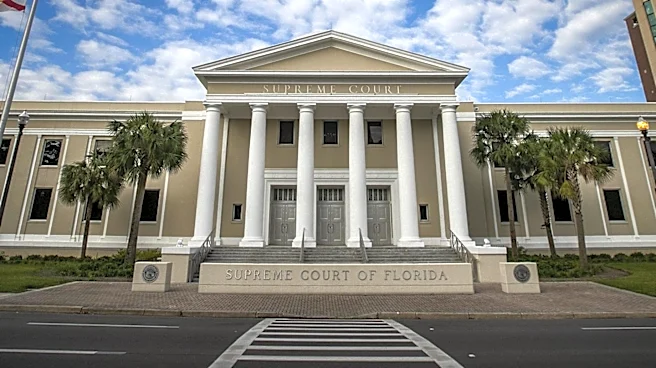
A federal appeals court has upheld Florida's social media law (HB 3), ruling that the ban on minors under 14 from creating personal social media accounts is likely constitutional. The 11th Circuit Court of Appeals overturned a lower court's preliminary
injunction against the law, stating that it likely survives intermediate scrutiny because it does not burden substantially more speech than necessary to protect minors from social media addiction. The law, signed by Governor Ron DeSantis in 2024, also requires 15- and 16-year-olds to obtain parental permission for social media accounts. It specifically targets platforms with "addictive features," such as unlimited scrolling and algorithms designed to retain user attention. NetChoice, a trade group representing technology and social media companies, expressed disappointment and is evaluating its options, warning that the ruling could force social media sites to implement digital ID requirements for all users.
Why It's Important?
This ruling is a significant development in the ongoing national debate over regulating social media access for minors and the balance between free speech and child protection. By upholding Florida's law, the appeals court sets a precedent that could influence similar legislative efforts in other states. The decision validates the argument that states have a compelling interest in protecting children from the perceived harms of social media addiction and its associated psychological impacts. For social media companies, the ruling presents a challenge to their current operating models, potentially requiring them to implement robust age verification systems and parental consent mechanisms, which could be costly and complex. It also raises questions about the future of online anonymity and privacy, as digital ID requirements could become more widespread.
What's Next?
NetChoice, the trade group that challenged the law, is considering its next steps, which could include an appeal to the U.S. Supreme Court. If the law remains in effect, social media platforms operating in Florida will need to comply with its provisions, including implementing age verification for new accounts and potentially for existing users. This could lead to significant changes in how platforms manage user access and data. The ruling may also encourage other states to pursue similar legislation, creating a patchwork of state-level regulations for social media companies. The debate over the constitutionality of such laws, particularly concerning First Amendment rights and the definition of "addictive features," is likely to continue in various legal and legislative forums.
Beyond the Headlines
The Florida social media law and the appeals court's decision delve into the complex interplay between technological advancement, parental rights, and governmental regulation. The concept of "social media addiction" as a public health concern is gaining traction, prompting legislative bodies to intervene in areas traditionally left to individual choice or parental discretion. This case highlights the evolving understanding of digital well-being and the potential for technology to impact mental health, especially among young people. It also underscores the tension between the open nature of the internet and the desire to create safer online environments for children. The implementation of digital ID requirements, if widely adopted, could fundamentally alter the landscape of online interaction, raising broader questions about privacy, data security, and the role of government in regulating digital citizenship.