




What's Happening?
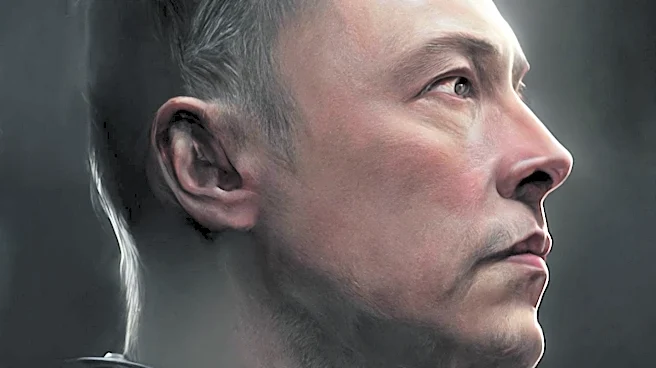
Two House Democrats, Reps. Bennie G. Thompson (D-Miss.) and James Walkinshaw (D-Va.), have requested that Elon Musk, former head of the Department of Government Efficiency (DOGE), and other DOGE officials testify under oath. This request follows a Government Accountability
Office (GAO) report that found the cost-cutting initiative significantly overstated its savings from Homeland Security Department (DHS) contract cancellations. The GAO reported that DHS terminated 438 contracts between January 20 and September 30, 2025, resulting in a net saving of approximately $92 million. This figure is substantially lower than the DHS's public report, which claimed potential savings of up to $10.5 billion. The discrepancy arises because DHS's methodology relied on the maximum amount that could have been spent under canceled contracts, while GAO focused on deobligated funds minus new costs incurred to settle terminated agreements.
Why It's Important?
This issue is significant as it raises questions about government accountability, transparency, and the accurate reporting of taxpayer money. The vast difference between the reported $10.5 billion in potential savings and the actual $92 million net savings highlights a potential misrepresentation of the effectiveness of government efficiency initiatives. Such discrepancies can erode public trust in government operations and financial management. Furthermore, the GAO found that 95% of the claimed $10.5 billion in potential savings was attributed to 30 terminated IT contracts, but DHS subsequently obligated over $1.7 billion through existing government-wide contracts to obtain those same services. This suggests that many 'saved' costs were merely shifted, not eliminated, impacting the efficiency and continuity of critical government functions. The Democrats' call for testimony underscores the need for rigorous oversight to ensure that cost-cutting measures genuinely benefit taxpayers and do not compromise essential public services.
What's Next?
The request for Elon Musk and other DOGE officials to testify indicates a push for greater scrutiny into the Department of Government Efficiency's operations and its impact on federal agencies. If the testimony proceeds, it will likely focus on how the DHS estimates were approved, the methodology used to calculate savings, and the actual consequences of the contract cancellations on departmental functions. This could lead to further investigations, policy changes regarding government contract management, and potentially stricter guidelines for reporting cost-saving initiatives. The outcome may also influence future government efficiency programs, emphasizing the need for transparent and verifiable metrics. Stakeholders, including government contractors and civil society groups, will be closely watching these developments, as they could impact future contracting opportunities and the delivery of public services.
Beyond the Headlines
The controversy surrounding the overstated savings from DHS contract cancellations delves into the ethical dimensions of public administration and the potential for political motivations to influence financial reporting. The Democrats' assertion that DOGE 'tried to sell the American people a lie' suggests a concern beyond mere accounting errors, hinting at a deliberate attempt to inflate achievements. This situation also highlights the inherent tension between cost-cutting mandates and the practical realities of maintaining essential government services. Indiscriminate contract cancellations, as alleged by the Democrats, could lead to disruptions in critical operations, loss of institutional knowledge, and increased costs in the long run if services need to be re-procured. This case could set a precedent for how government efficiency initiatives are evaluated and communicated to the public, emphasizing the importance of independent oversight bodies like the GAO in ensuring factual accuracy and accountability.