




What's Happening?
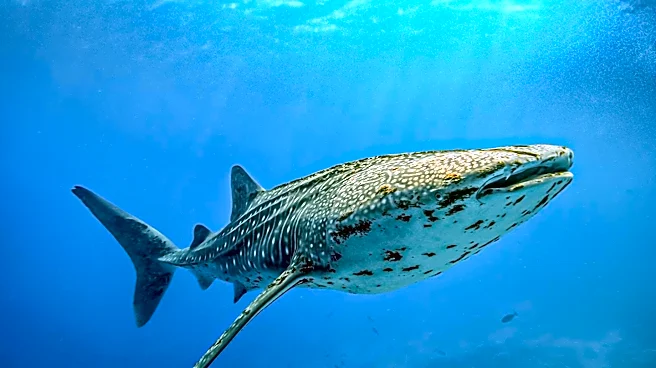
Two endangered whale sharks were recently sighted off the coast of New York City, approximately 100 miles south of the Big Apple, near the Hudson Canyon. This rare occurrence was captured on video by Chris St. Lawrence, a naturalist with American Princess
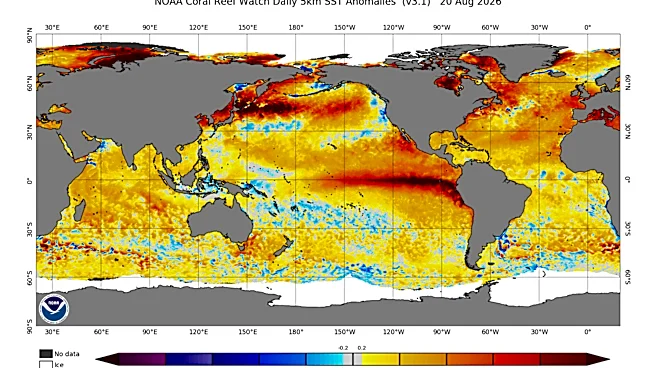
Cruises, during a 24-hour pelagic trip. The whale sharks, the largest known fish species, approached the vessel multiple times. Researchers estimate that only about 200,000 whale sharks remain globally, and their population is still significantly below full recovery. The National Oceanic and Atmospheric Administration (NOAA) is currently in the early stages of designating the Hudson Canyon as a National Marine Sanctuary to enhance protection for whale sharks and other vital marine life in the area. The sighting also included other rare species for New York waters, such as whitetail tropic birds, a juvenile Sabine’s Gull, a leatherback sea turtle, a humpback whale mother and calf, and yellowfin tuna. St. Lawrence suggested that warmer waters from the Gulf Stream might have contributed to the presence of these tropical species, though more research is needed to confirm this.
Why It's Important?
The sighting of endangered whale sharks off the New York City coast underscores the critical need for marine conservation efforts and highlights the ecological significance of the Hudson Canyon. Whale sharks, listed as endangered in 2016, face ongoing threats from vessel strikes, bycatch, fishing activities, finning, and climate change, according to the International Union for Conservation of Nature. The proposed designation of the Hudson Canyon as a National Marine Sanctuary by NOAA is a crucial step towards safeguarding this rich marine ecosystem. Such a designation would provide enhanced protections, potentially mitigating human-induced threats and supporting the recovery of endangered species like the whale shark. The presence of these large, migratory species also indicates the health and biodiversity of the waters off the U.S. East Coast, emphasizing the interconnectedness of marine environments and the broader impact of climate and human activities on ocean life. Protecting these areas ensures the survival of not only whale sharks but also a multitude of other marine organisms that rely on these habitats.
What's Next?
The National Oceanic and Atmospheric Administration (NOAA) will continue its process of designating the Hudson Canyon as a National Marine Sanctuary. This designation is expected to bring increased protection and management strategies for the area, aiming to conserve its diverse marine life, including endangered species like the whale shark. Public awareness campaigns and educational initiatives will likely follow to inform the public about the importance of marine conservation and responsible interactions with wildlife in these waters. Researchers will also continue to monitor whale shark movements and behavior, potentially utilizing satellite tagging and other technologies to gain a better understanding of their migration patterns and habitat use. Further studies will be essential to determine the long-term effects of environmental factors, such as warmer water temperatures, on the distribution of whale sharks and other marine species in the region. The success of these conservation efforts will depend on continued collaboration between government agencies, scientific institutions, and local communities.
Beyond the Headlines
The rare sighting of whale sharks near a major metropolitan area like New York City carries deeper implications beyond immediate conservation efforts. It highlights the increasing visibility of marine life in unexpected locations, potentially due to changing ocean conditions influenced by climate change. This phenomenon could lead to a re-evaluation of established marine protected areas and the need for more dynamic conservation strategies that adapt to shifting species distributions. Ethically, the presence of these vulnerable creatures so close to human activity raises questions about our responsibility to protect marine biodiversity in increasingly urbanized coastal zones. It also presents a unique opportunity for public engagement and education, transforming abstract conservation concepts into tangible experiences for urban populations. The Hudson Canyon, as a potential sanctuary, could become a symbol of successful human-wildlife coexistence, fostering a greater appreciation for marine ecosystems and inspiring broader environmental stewardship. This event could also spur further scientific inquiry into the ecological connectivity between offshore canyons and coastal waters, revealing new insights into marine food webs and migratory corridors.