






What's Happening?
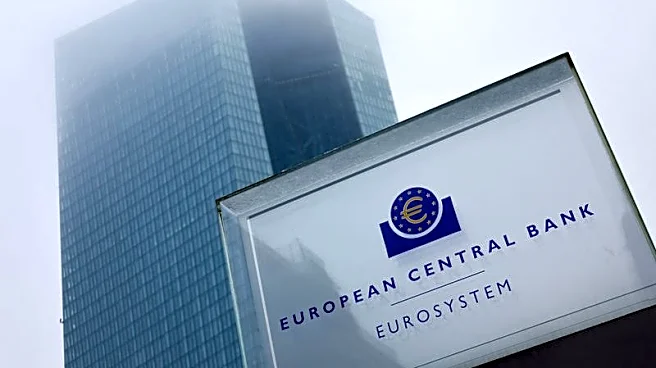
The European Central Bank (ECB) is preparing to raise interest rates in response to rising inflation, which has surged to 3% in the eurozone due to the ongoing conflict in the Middle East. This increase follows a period when inflation had dipped below
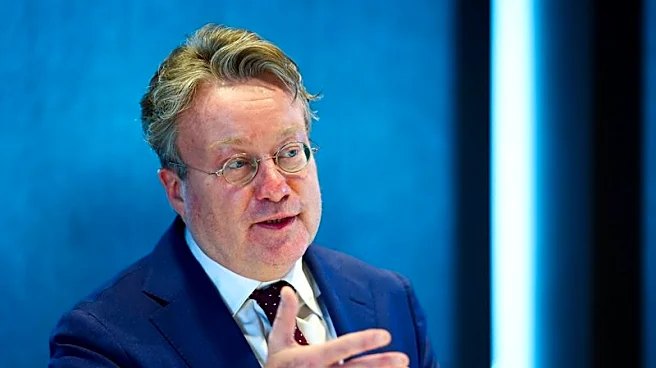
the ECB's target of 2%. The conflict, particularly the closure of the Strait of Hormuz, has led to spiking oil prices, contributing to inflationary pressures. Francois Villeroy de Galhau, a member of the ECB's Governing Council, emphasized the ECB's commitment to bringing inflation back to target levels. The ECB's actions are aimed at mitigating the economic impact of the conflict and stabilizing financial markets.
Why It's Important?
The ECB's decision to potentially raise interest rates is significant as it reflects the central bank's proactive approach to managing inflation, which can have widespread economic implications. Rising inflation affects consumer purchasing power and can lead to increased costs for businesses, potentially slowing economic growth. The ECB's actions are crucial in maintaining financial stability in the eurozone, especially given the region's vulnerability to energy shocks. The decision also highlights the interconnectedness of global events, such as the Middle East conflict, and their impact on European economies.
What's Next?
The ECB is expected to announce its decision on interest rates at its upcoming June meeting. Market participants are anticipating a rate hike, with some expecting an increase of at least 50 basis points by the end of the year. The ECB will continue to monitor inflationary trends and adjust its monetary policy accordingly. The central bank's actions will be closely watched by financial markets and policymakers, as they navigate the challenges posed by geopolitical tensions and their economic repercussions.