
What's Happening?
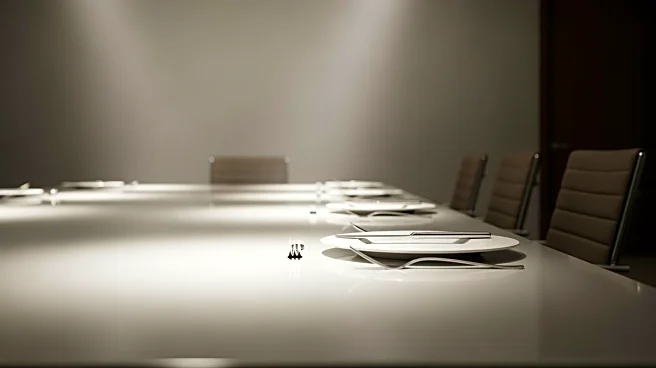
During the Maryland General Assembly's 90-day legislative session, energy companies and various interest groups spent over $589,000 on 'committee dinners' with lawmakers. These events, held at upscale
restaurants, allow lobbyists to discuss policy over meals with legislators. Del. Joe Vogel, a Democrat from Montgomery County, has introduced a bill to prohibit such dinners, citing concerns over undue influence and the contrast between lavish meals and the struggles of average constituents. Vogel's proposal aims to reduce corruption and restore public trust in government, although some lawmakers argue that these dinners do not significantly impact legislative decisions.
Why It's Important?
The practice of lobbyist-funded dinners highlights the financial leverage that corporations and special interest groups have in influencing legislative processes. This raises ethical concerns about transparency and fairness in policymaking, as average citizens lack similar access to lawmakers. Vogel's bill seeks to address these issues by curbing potential corruption and ensuring that elected officials prioritize the interests of their constituents over those of well-funded lobbyists. The outcome of this legislative effort could set a precedent for other states grappling with similar ethical dilemmas in political lobbying.
What's Next?
If Vogel's bill gains traction, it could lead to significant changes in how lobbyists interact with lawmakers in Maryland. The proposal may spark broader discussions on lobbying practices and campaign finance reform, potentially influencing similar legislative efforts in other states. Stakeholders, including lobbyists, corporations, and advocacy groups, are likely to respond with varying degrees of support or opposition, depending on their interests. The bill's progress will be closely watched by those advocating for increased transparency and accountability in government.