






What's Happening?
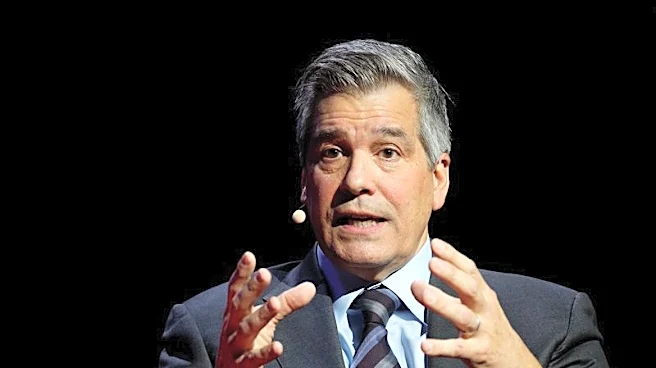
Dr. Magdalena Lopez, a Visiting Associate Professor at the Kellogg Institute for International Studies at the University of Notre Dame, is questioning the prevailing US-centric framework within Latin American studies, particularly concerning Venezuela's
authoritarian shift. Lopez argues that this framework often diverts attention from the internal dynamics of the chavista-madurista state by overemphasizing external factors like imperialism. She contends that this approach stems from long-standing ideas within the field, such as anti-Americanism and the perception of Latin America as a utopian alternative to the West. These ideas, Lopez suggests, have inadvertently granted authority to intellectuals outside Venezuela, often from the US or Europe, to interpret its political landscape. By focusing heavily on US responsibility, much of the existing literature overlooks Venezuela's own historical context, including decades of bipartisan social democracy, state control over oil revenue, and continuous trade with Washington before the chavista regime. Furthermore, this external focus tends to ignore the current regime's control over public institutions, security forces, severe inequality, poverty, state resource plunder, and extensive human rights violations.
Why It's Important?
Dr. Lopez's critique is significant because it challenges the foundational assumptions and methodologies within Latin American studies, particularly in how political developments in the region are analyzed and understood in the United States. By advocating for a shift away from a US-centric perspective, she highlights the potential for a more nuanced and accurate understanding of complex political situations like Venezuela's. This re-evaluation could lead to a more inclusive academic discourse, empowering local voices and perspectives that are often marginalized in broader international analyses. For US foreign policy and academic institutions, this perspective suggests a need to re-examine how they engage with and interpret Latin American affairs, potentially fostering policies that are more responsive to internal realities rather than external narratives. The emphasis on human rights and local voices could also influence how international organizations and NGOs approach advocacy and support in the region, ensuring that interventions are grounded in the experiences and needs of the affected populations.
What's Next?
The ongoing discourse initiated by scholars like Dr. Lopez could lead to a re-evaluation of curricula and research priorities within US academic institutions focusing on Latin American studies. There may be an increased emphasis on incorporating diverse scholarly perspectives from within Latin America and fostering collaborations that prioritize local expertise. This shift could also influence funding priorities for research, encouraging projects that delve into internal political, social, and economic dynamics rather than solely focusing on external influences. Furthermore, this intellectual movement might prompt greater scrutiny of the role of US-based intellectuals and institutions in shaping narratives about Latin American countries. Future academic conferences and publications are likely to feature more debates and discussions centered on decolonizing Latin American studies and ensuring that the voices of those directly impacted by political events are central to the analysis.
Beyond the Headlines
Dr. Lopez's argument extends beyond academic methodology, touching upon ethical and political dimensions of knowledge production. Her critique implies that an overreliance on external frameworks can inadvertently contribute to a form of intellectual complicity, where ideological loyalties overshadow the testimonies of victims and the realities on the ground. This raises profound questions about the responsibility of scholars and institutions in shaping public understanding and policy. The call to prioritize local voices and human rights in critical Latin Americanism suggests a broader movement towards decolonizing academic fields, challenging the historical power imbalances in knowledge dissemination. This could lead to a more equitable global intellectual landscape where diverse perspectives are not just acknowledged but are central to understanding complex geopolitical issues, fostering a more ethical and inclusive approach to international relations and scholarship.