





What's Happening?
A Forbes investigation has raised questions regarding the authenticity of President Trump's medical letter, alleging it was AI-generated. The publication utilized Pangram, an AI text detector, which indicated a high probability of AI involvement in the letter.
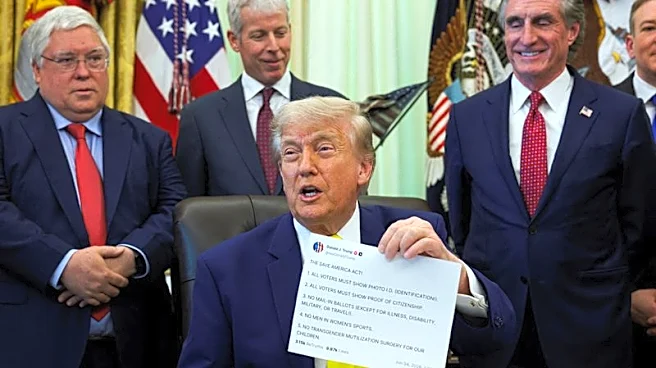
Beyond the medical letter, Forbes also examined thousands of White House press releases spanning the last three presidential elections. The investigation suggests a significant increase in the use of AI in official White House communications since President Trump's second term. Specifically, Pangram classified approximately 10% of the second Trump administration’s press releases as either AI-written or mixed, with this rate increasing to 18% for releases in 2026. This trend indicates that AI has become a regular tool within the White House press office, despite the technology's relatively recent widespread availability.
Why It's Important?
The alleged use of AI in President Trump's medical letter and White House press releases raises significant concerns about transparency and public trust in official communications. If AI is being used to generate or assist in drafting critical documents like medical reports, it could lead to questions about the accuracy and genuine nature of such information. For the public, this could erode confidence in the information disseminated by the White House, making it harder to discern human-authored content from AI-generated text. From a broader perspective, the increasing integration of AI in government communications could set a precedent for how official information is produced and consumed, potentially impacting journalistic scrutiny and the public's ability to hold leaders accountable. The findings suggest a shift in communication strategies within the highest levels of government, with potential implications for how information is crafted and perceived by citizens and the media.
What's Next?
The findings from the Forbes investigation are likely to prompt further scrutiny into the use of AI in government communications. Media outlets and watchdog organizations may intensify their efforts to identify and analyze AI-generated content in official statements and documents. This could lead to calls for greater transparency from the White House regarding its use of AI tools in public relations. Additionally, the debate around the ethical implications of AI in political communication is expected to grow, potentially leading to discussions about guidelines or regulations for AI usage in government. The public's perception of official communications may also evolve, with a heightened awareness and skepticism towards the authenticity of information, especially if the use of AI becomes more prevalent and less disclosed.
Beyond the Headlines
The alleged use of AI in President Trump's medical letter and White House press releases points to a deeper societal shift in the age of artificial intelligence. This development highlights the growing challenge of distinguishing between human-authored and AI-generated content, particularly in contexts where authenticity and credibility are paramount. Ethically, it raises questions about the responsibility of government entities to disclose their use of AI in public communications, especially when such content pertains to sensitive matters like a leader's health. Legally, the lack of clear regulations around AI-generated content in official documents could lead to future disputes regarding accountability and truthfulness. Culturally, it reflects a broader trend of AI integration into various aspects of life, prompting a re-evaluation of how we perceive and trust information in an increasingly AI-driven world. This could lead to a demand for new standards of transparency and verification in public discourse.