



What's Happening?
A group of House Democrats has requested a federal judge to require the Department of Homeland Security (DHS) to justify a new policy mandating a seven-day notice for congressional visits to immigration detention facilities. This policy, reinstated by
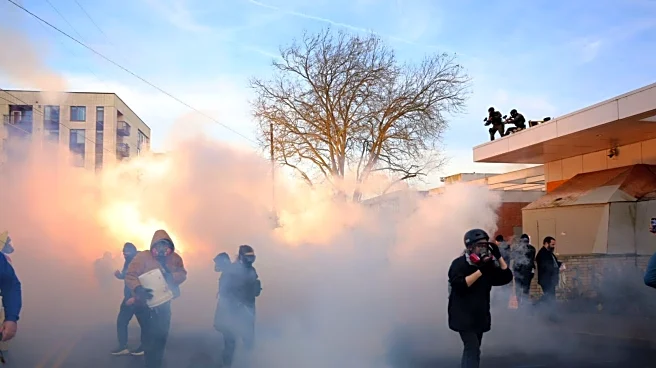
DHS Secretary Kristi Noem, is seen as conflicting with a December court order that temporarily blocked a similar requirement. The court order was issued after lawmakers argued that such notice requirements violate a legal provision allowing congressional tours without advance notice. The policy was reintroduced following an incident involving the fatal shooting of Renee Nicole Good by an ICE agent in Minneapolis. Noem claims the policy is funded by the One Big Beautiful Bill Act, which is separate from annual appropriations that typically fund agency operations. However, attorneys representing the lawmakers argue that DHS has not demonstrated that the policy's implementation is solely funded by this act.
Why It's Important?
The dispute over the policy highlights ongoing tensions between congressional oversight and executive branch operations, particularly concerning immigration enforcement. The requirement for advance notice could hinder lawmakers' ability to conduct unannounced inspections, potentially affecting transparency and accountability within ICE facilities. This situation underscores the broader debate over immigration policies and the balance of power between legislative oversight and executive enforcement. The outcome of this legal challenge could set a precedent for how congressional oversight is conducted in sensitive areas like immigration detention, impacting how future policies are crafted and implemented.
What's Next?
The federal judge's decision on whether DHS must comply with the court order will be pivotal. If the court sides with the lawmakers, DHS may need to revise or abandon the notice requirement, potentially leading to increased congressional scrutiny of ICE facilities. Conversely, if the policy is upheld, it could embolden similar restrictions on oversight in other areas. Stakeholders, including immigration advocacy groups and civil rights organizations, are likely to monitor the case closely, as it could influence broader immigration policy debates and enforcement practices.