
What's Happening?
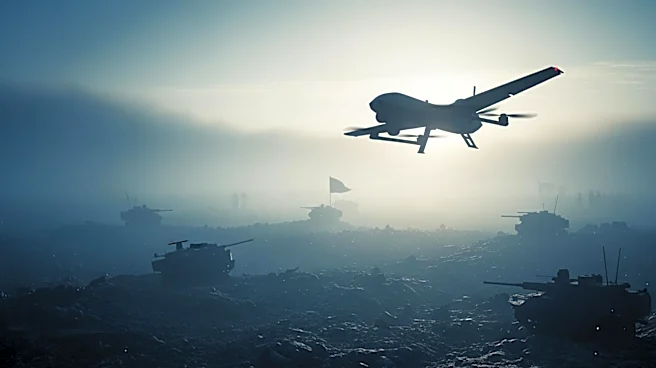
Ukraine's use of drones has significantly impacted Russian military operations, prompting a shift in tactics. Ukrainian forces have effectively utilized drones to target Russian logistics lines and military assets,
extending their reach up to 160 kilometers from the frontline. This strategic use of drones has led to substantial damage to Russia's Black Sea naval fleet, with Ukraine claiming that approximately a third of the fleet has been destroyed or severely damaged. The ongoing conflict has also seen Russia adapting by employing motorbikes, quadbikes, and buggies to avoid the vulnerabilities of traditional armored vehicles against drone strikes. Additionally, international partnerships are forming to bolster Ukraine's drone production capabilities, with countries like Germany, Norway, and the Netherlands committing financial support for joint manufacturing ventures.
Why It's Important?
The shift in military tactics underscores the evolving nature of modern warfare, where technology and innovation play crucial roles. Ukraine's effective use of drones not only disrupts Russian military operations but also challenges traditional military strategies that rely heavily on armored vehicles and large-scale troop deployments. This development has broader implications for global military strategies, as nations may need to reassess their defense capabilities and invest in advanced technologies to counter similar threats. The international support for Ukraine's drone production highlights the geopolitical significance of the conflict, as Western nations seek to strengthen Ukraine's defense capabilities against Russian aggression. This support could further strain Russia's resources and complicate its military objectives in the region.
What's Next?
As the conflict continues, it is likely that both Ukraine and Russia will further adapt their military strategies. Ukraine may continue to enhance its drone capabilities, potentially increasing the frequency and range of its strikes. Russia, on the other hand, may seek to develop countermeasures against drone attacks or increase its reliance on unconventional tactics to mitigate the impact of drone warfare. The international community's involvement in supporting Ukraine's defense efforts could lead to increased tensions between Russia and Western nations, potentially influencing diplomatic relations and security policies. Additionally, the ongoing conflict may prompt other countries to reevaluate their military strategies and invest in emerging technologies to address similar threats in the future.
Beyond the Headlines
The use of drones in the Ukraine conflict highlights the ethical and legal challenges associated with modern warfare. The ability to conduct remote strikes raises questions about accountability and the potential for collateral damage. As drone technology becomes more accessible, there is a risk of proliferation to non-state actors, which could pose security threats beyond the current conflict. The situation also underscores the importance of international regulations and agreements to govern the use of drones in military operations. Furthermore, the conflict's impact on Russia's economy and military capabilities may have long-term implications for its global standing and influence, potentially reshaping the geopolitical landscape.