


What's Happening?
In 1927, John D. Rockefeller Jr. secretly purchased more than 35,000 acres of land in Jackson Hole, Wyoming, for $1.4 million, with the ultimate goal of donating it to the federal government for national park expansion. This acquisition was conducted
through a shell company, the Snake River Land Company, to prevent landowners from inflating prices. The National Park Service (NPS) notes that acquiring the same amount of land in Jackson Hole today would cost over $1 billion. Rockefeller's plan, developed with Yellowstone Superintendent Horace Albright, aimed to preserve the valley's open spaces from uncontrolled development. The deception, however, led to significant distrust within the local community when the true nature of the purchases was revealed in 1930, prompting a Senate investigation in 1932.
Why It's Important?
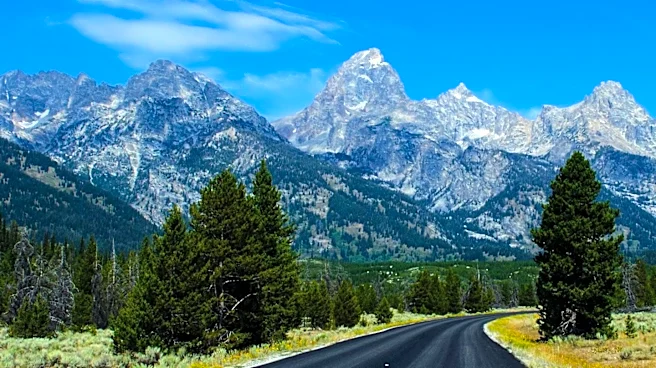
This historical land acquisition is significant for its role in the establishment and expansion of Grand Teton National Park, a major U.S. national park. Rockefeller's philanthropic efforts, though initially controversial due to the secretive methods, ultimately led to the preservation of a vast natural landscape for public enjoyment and conservation. The story highlights the complex dynamics between private philanthropy, government conservation efforts, and local community interests. The immense increase in land value from $1.4 million in 1927 to over $1 billion today underscores the economic and environmental significance of such protected areas and the foresight of early conservationists. The initial community distrust also serves as a historical lesson on transparency in large-scale land acquisition projects, even those with benevolent intentions.
What's Next?
While this event is historical, its legacy continues to shape the management and perception of Grand Teton National Park. The park, expanded in 1950 to include Rockefeller's donated lands, remains a vital part of the U.S. National Park System. The John D. Rockefeller, Jr. Memorial Parkway, established in 1972, further honors his contributions. The story continues to be a case study in land conservation, illustrating both the challenges and successes of large-scale environmental protection initiatives. Future discussions around national park funding, land management, and community engagement can draw parallels from this historical precedent, particularly concerning the balance between conservation goals and local economic and social impacts.
Beyond the Headlines
The secret land acquisition by John D. Rockefeller Jr. delves into deeper ethical and legal dimensions of conservation. While the outcome was beneficial for national park creation, the use of a shell company and the initial deception raised questions about the means justifying the ends. This historical event reflects a period when conservation strategies sometimes involved less transparent methods to achieve public good, contrasting with modern expectations for stakeholder engagement and transparency. It also highlights the enduring power of private wealth in shaping public landscapes and national heritage. The lasting mistrust in Jackson Hole, despite the positive outcome, underscores the importance of community relations and ethical practices in conservation efforts, even when driven by philanthropic motives.