
What's Happening?
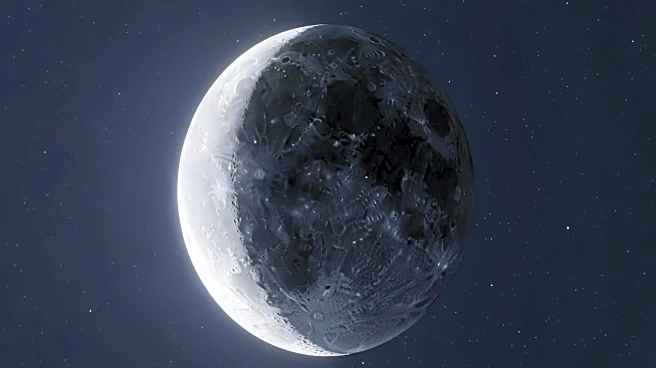
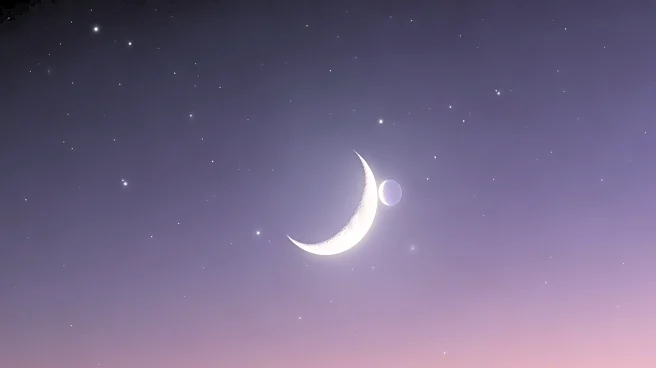
On December 17, 2025, a celestial event featuring the crescent Moon and the planet Mercury is captivating sky watchers. The event occurs in the predawn sky, where a 6-percent-lit waning crescent Moon appears
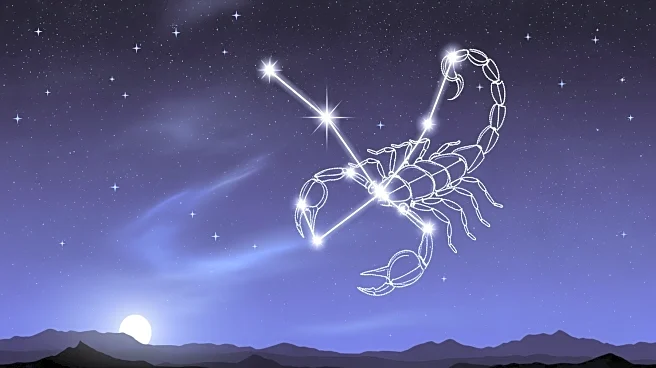
approximately 10 degrees from Mercury, which is 82 percent illuminated. This alignment is visible in the southeast sky, with the Moon positioned in Libra and Mercury in Scorpius. The Moon will pass south of Mercury and Antares, a bright star in Scorpius, while Mercury will move into the constellation Ophiuchus by December 18. Observers can see the Moon's illumination decrease to 2 percent, with Mercury presenting 84 percent illumination. This event provides a unique opportunity for astronomers and enthusiasts to observe the dynamic interactions within our solar system.
Why It's Important?
This astronomical event is significant for both amateur and professional astronomers as it offers a chance to observe the interactions between celestial bodies. Such events help in understanding the movement and positioning of planets and stars, contributing to broader astronomical knowledge. For the general public, it provides an opportunity to engage with astronomy and appreciate the natural phenomena occurring in the sky. The visibility of Mercury, a planet often difficult to observe due to its proximity to the Sun, adds to the event's importance, offering a rare glimpse of this elusive planet.
What's Next?
Following this event, Mercury will continue its journey into the constellation Ophiuchus, and the Moon will further wane, becoming less visible in the night sky. Astronomers and sky watchers will likely continue to track these celestial movements, using telescopes and binoculars to enhance their observations. The event also sets the stage for future astronomical phenomena, encouraging continued public interest and participation in sky watching activities.