






What's Happening?
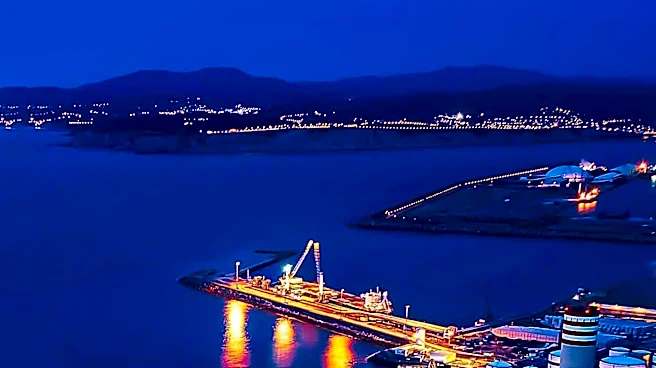
Kazakhstan, one of the world's top ten oil producers, has seen its daily crude oil production cut in half following the closure of its main export terminal in Russia's Black Sea. The closure was prompted by drone attacks, leading to significant disruptions
in oil exports. The Kazakhstani Energy Ministry reported that oil companies have reduced output due to these export restrictions, and operations at the Caspian Pipeline Consortium have been halted for safety reasons. The exact scale of the production cutbacks has not been disclosed, but industry sources indicate that oil and gas condensate output has more than halved from average levels, equating to around 1 million barrels per day.
Why It's Important?
The reduction in Kazakhstan's oil production has significant implications for global oil markets, potentially affecting oil prices and supply chains. As a major oil producer, Kazakhstan's output is crucial for meeting international demand. The disruption caused by the closure of export terminals highlights the vulnerability of global energy infrastructure to geopolitical tensions and security threats. This situation may lead to increased volatility in oil prices, impacting economies worldwide. Additionally, the production cutbacks could have economic repercussions for Kazakhstan, affecting government revenues and the broader economy, which relies heavily on oil exports.
What's Next?
In the wake of the production cutbacks, Kazakhstan may need to explore alternative export routes or increase security measures to protect its energy infrastructure. The situation could prompt discussions on enhancing regional cooperation to ensure the stability of energy supplies. International stakeholders, including oil-importing countries, may closely monitor developments and adjust their strategies to mitigate potential supply disruptions. The incident may also lead to increased investment in energy security and diversification of energy sources to reduce reliance on vulnerable supply routes.
Beyond the Headlines
The closure of Kazakhstan's export terminals underscores the broader geopolitical challenges facing the global energy sector. The incident highlights the need for robust security measures to protect critical infrastructure from emerging threats such as drone attacks. It also raises questions about the resilience of global supply chains and the importance of diversifying energy sources to enhance energy security. The situation may prompt a reevaluation of energy policies and strategies to address the growing risks associated with geopolitical tensions and technological advancements in warfare.