
What's Happening?
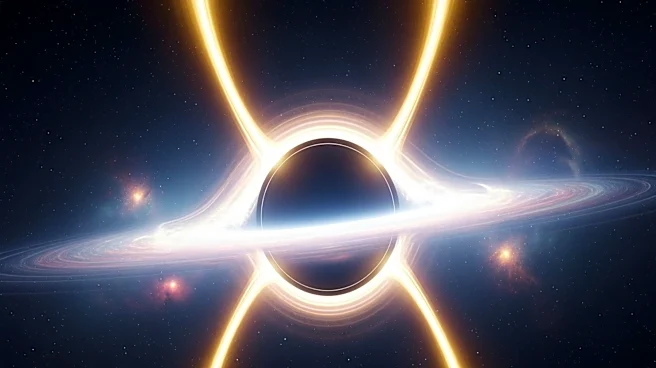
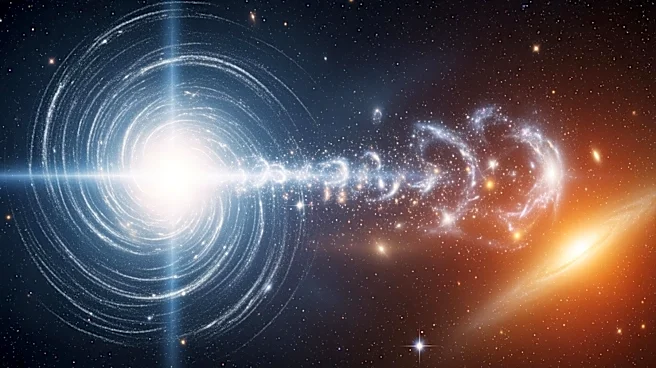
A team from the University of Arizona's Steward Observatory, led by Weizhe Liu and Xiaohui Fan, has discovered powerful galactic winds emanating from quasars just a billion years after the Big Bang. These
winds, reaching speeds of up to 5,000 miles per second, are believed to be responsible for halting star formation in young galaxies. The study, published in Nature, highlights the role of supermassive black holes in galaxy evolution. The researchers used the James Webb Space Telescope to identify 27 quasars, six of which exhibited these rapid outflows. The findings suggest that such extreme outflows were more common in the early universe, potentially explaining why many galaxies ceased star formation early on.
Why It's Important?
This discovery provides crucial insights into the relationship between supermassive black holes and their host galaxies. The ability of quasars to expel gas from galaxies could explain the early cessation of star formation, challenging existing models of galaxy evolution. Understanding these processes is vital for cosmology, as it sheds light on the formation and development of galaxies. The study also underscores the importance of advanced telescopes like the James Webb Space Telescope in exploring the universe's early history. The findings could lead to a reevaluation of how galaxies evolve and the role of black holes in this process.
What's Next?
The research team plans to continue studying these quasar winds to better understand their impact on galaxy evolution. Further observations could reveal more about the frequency and intensity of such outflows in the early universe. The findings may prompt additional studies to explore the mechanisms driving these winds and their long-term effects on galaxies. As the James Webb Space Telescope continues to provide data, researchers will likely refine their models of galaxy formation and evolution, potentially leading to new theories about the universe's early development.