
What's Happening?
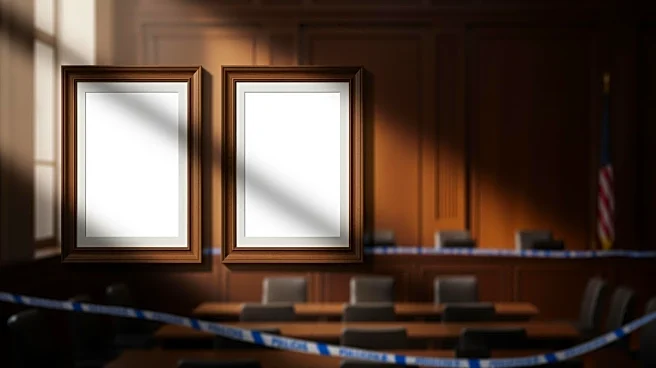
Nebraska State Senator Machaela Cavanaugh was captured on Capitol security footage removing portraits of America's Founders from a hallway in the state Capitol. The portraits were part of an exhibit celebrating
the 250th anniversary of America's founding, provided by the conservative nonprofit PragerU. Governor Jim Pillen criticized Cavanaugh's actions, describing them as divisive and partisan. Cavanaugh defended her actions by citing a Capitol rule that limits displays to the first-floor rotunda for a one-week period and prohibits leafleting. She claimed the portraits violated these rules and were not approved. Cavanaugh stated that she did not intend to damage the artwork and informed the Nebraska State Patrol of their location. The portraits were returned without damage, and no citation was issued.
Why It's Important?
This incident highlights ongoing tensions between political ideologies, particularly in how historical narratives and symbols are presented in public spaces. The removal of the portraits by a Democratic lawmaker from an exhibit organized by a conservative group underscores the deep divisions in American politics. The event has sparked discussions about freedom of speech and the role of public officials in regulating displays in government buildings. It also raises questions about the balance between celebrating national history and adhering to procedural rules. The incident has drawn significant public attention, with over a million views on social media, reflecting the contentious nature of cultural and historical representation in the U.S.
What's Next?
The incident may lead to further scrutiny of how exhibits and displays are managed in public buildings, potentially prompting a review of existing rules and regulations. Stakeholders, including political leaders and advocacy groups, might engage in debates over the appropriateness of certain historical narratives in public spaces. PragerU and other conservative organizations may use this incident to rally support and highlight perceived biases against their initiatives. Additionally, the event could influence future legislative actions or discussions regarding the preservation and presentation of historical artifacts in state and national contexts.