







What's Happening?
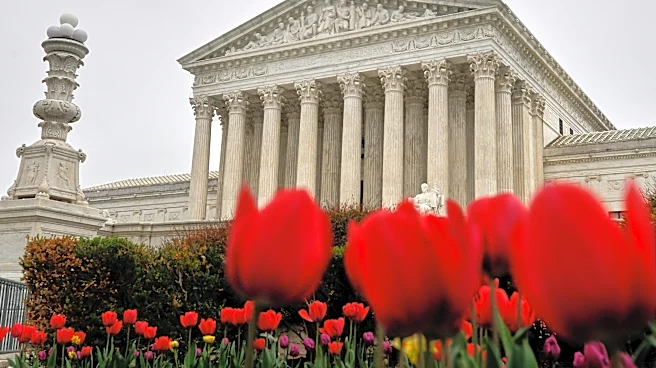
The U.S. Supreme Court is set to decide whether to take up a case that could significantly impact the availability of medication-only abortion procedures. This follows a series of state-level restrictions that have emerged since the 2022 Dobbs decision,
which returned the power to regulate abortion to individual states. In response, several states, including California, have enacted laws to protect access to abortion-inducing medications like mifepristone, often prescribed via telehealth. However, states with strict abortion bans, such as Louisiana, are challenging these measures. Louisiana is suing the Food and Drug Administration (FDA) over its approval of mifepristone for telehealth prescriptions, arguing that it poses safety risks. The Supreme Court recently lifted a stay that had halted the tele-prescription of mifepristone, allowing its use until at least May 11, 2026.
Why It's Important?
The Supreme Court's decision on this case could have far-reaching implications for abortion access across the United States. If the court decides to restrict or ban the tele-prescription of mifepristone, it could force women to rely on less effective and potentially riskier abortion methods. This would disproportionately affect women in states with strict abortion laws, where access to in-person care is limited. The case also highlights the ongoing tension between state and federal authorities over reproductive rights, with states like California seeking to protect access while others, like Louisiana, push for more restrictive measures. The outcome could influence public opinion and political dynamics, especially with the upcoming midterm elections.
What's Next?
The Supreme Court's decision on whether to hear the case will be closely watched, as it could set a precedent for future legal battles over abortion rights. If the court takes up the case, it could lead to a reevaluation of the FDA's role in regulating abortion medications and potentially impact the availability of telehealth services for reproductive care. States with restrictive abortion laws may continue to pursue legal challenges against states that protect access, potentially leading to further polarization on the issue. Additionally, the political implications for the Trump administration and its handling of reproductive rights could become a focal point in the upcoming elections.
Beyond the Headlines
The legal battles over abortion medication access underscore broader ethical and cultural debates about reproductive rights in the United States. The case raises questions about the balance between state sovereignty and federal oversight, as well as the role of the judiciary in shaping public policy. It also highlights the challenges faced by healthcare providers who navigate conflicting state and federal regulations. The outcome could influence the future of telehealth services and the accessibility of reproductive care, particularly for marginalized communities. As states continue to diverge on abortion policies, the issue remains a contentious and deeply divisive topic in American society.