








What's Happening?
The U.S. Department of Energy (DOE) and the American Bureau of Shipping (ABS) have partnered to assess the technical, regulatory, and commercial requirements for deploying nuclear technology in maritime applications. This collaboration, involving DOE’s
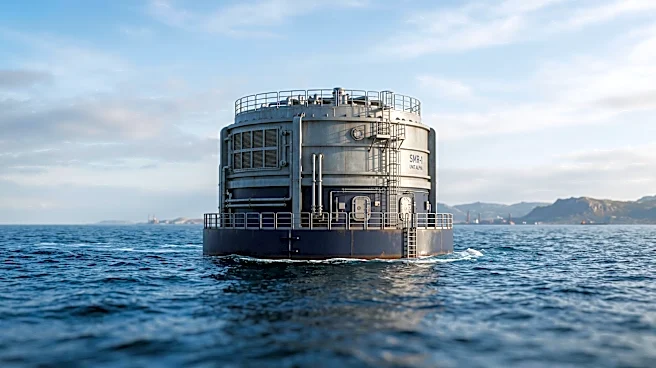
Office of Nuclear Energy, will focus on feasibility studies for floating reactors, dedicated nuclear shipping corridors, and the necessary infrastructure to support nuclear-powered vessels. ABS will co-manage the Maritime Nuclear Applications Group, contributing its expertise in marine engineering, classification, and regulatory frameworks. This initiative builds on previous research into commercial nuclear propulsion, including a 2022 DOE contract with ABS to examine barriers to its adoption and ABS's development of rules for floating nuclear power plants.
Why It's Important?
This collaboration is a significant step towards potentially revolutionizing the U.S. and global maritime industry by introducing nuclear propulsion. For the U.S., it could enhance energy independence, reduce carbon emissions from shipping, and create new opportunities in specialized marine engineering and nuclear technology sectors. The development of nuclear-powered commercial vessels and floating nuclear power plants could offer long-term operational cost savings, especially under future carbon-pricing scenarios, despite higher initial construction costs. However, significant challenges remain, including regulatory approval, insurance, nuclear fuel supply, spent-fuel management, and port access. The success of this initiative could position the U.S. as a leader in advanced maritime nuclear technology, influencing international shipping standards and energy policies.
What's Next?
The immediate next steps involve conducting comprehensive feasibility studies and technical assessments. These studies will cover commercial nuclear-powered ships, floating nuclear power plants, dedicated nuclear shipping corridors, and the required port and industrial infrastructure. The Maritime Nuclear Applications Group will coordinate research and address regulatory, safety, and economic considerations. While no specific vessel or construction program has been committed to, the findings from these studies will inform future investment decisions and potential policy changes. Stakeholders, including reactor vendors, shipbuilders, and regulatory bodies, will closely monitor the progress, as the outcomes will dictate the timeline and scope of any future commercial procurement and deployment of maritime nuclear technology.
Beyond the Headlines
The push for nuclear-powered shipping and floating reactors carries profound implications beyond immediate economic and environmental benefits. It raises critical questions about nuclear safety and security in a maritime context, particularly concerning potential accidents, proliferation risks, and the management of nuclear waste at sea or in port. The establishment of dedicated nuclear shipping corridors and specialized port infrastructure would necessitate robust international cooperation and stringent safety protocols. Furthermore, public perception and acceptance of nuclear technology in commercial shipping will be a crucial factor. This initiative could also accelerate the development of advanced reactor technologies, potentially leading to broader applications of small modular reactors (SMRs) and other innovative nuclear designs, impacting global energy strategies and technological advancements in the long term.