




What's Happening?
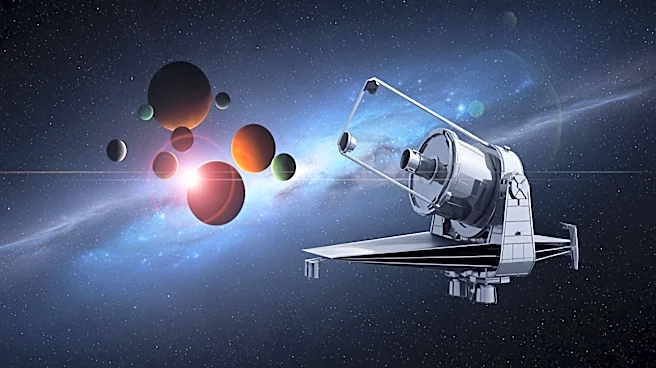
Astronomers have observed the 'breath of the solar system' through X-ray emissions, a phenomenon known as 'solar wind charge exchange.' This discovery was made using the eROSITA space telescope, which mapped the sky in 'soft X-rays.' The emissions occur
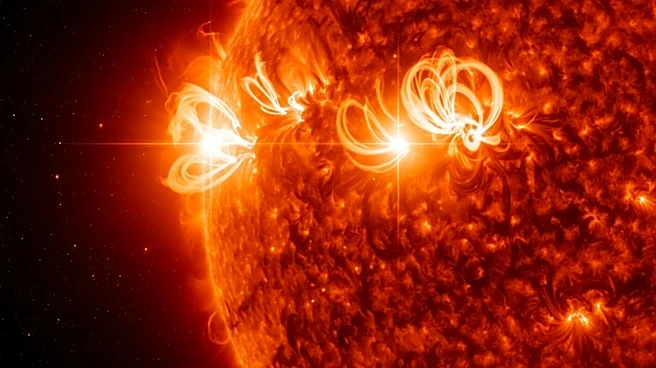
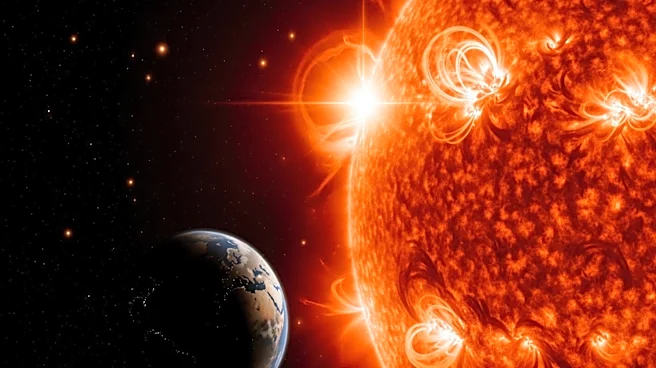
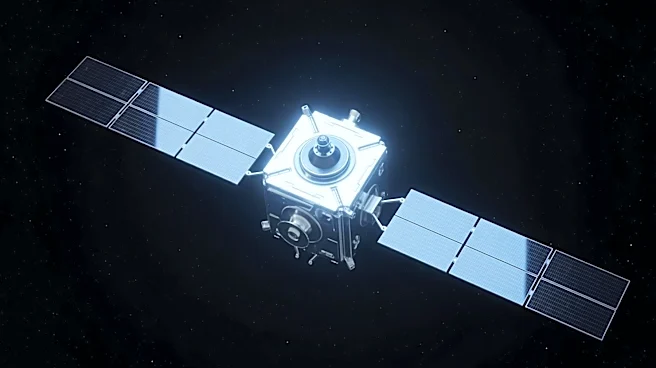
when solar wind ions, such as carbon and oxygen, interact with neutral atoms in Earth's atmosphere and the heliosphere. Previously considered interference, this phenomenon is now recognized as a significant area of study. The eROSITA telescope, positioned at Lagrange Point 2, collected data over two years, revealing variations in X-ray emissions linked to solar activity.
Why It's Important?
This discovery provides new insights into the interactions between solar wind and the heliosphere, enhancing our understanding of space weather and its effects on Earth. The ability to map these X-ray emissions allows scientists to study the solar wind's components and its interaction with the interstellar medium. This research could improve predictions of solar activity and its impact on satellite operations, communication systems, and power grids. Understanding these dynamics is crucial for mitigating the risks associated with solar storms and ensuring the resilience of technological infrastructure.
What's Next?
The findings from the eROSITA telescope will likely lead to further studies on the solar wind's behavior and its influence on the heliosphere. Researchers may focus on refining models of solar activity and its impact on Earth's environment. Additionally, the data could inform the development of new technologies to protect satellites and other space-based assets from solar radiation. As the solar cycle progresses, continued monitoring of X-ray emissions will be essential for advancing our knowledge of heliophysics and improving space weather forecasting.