
What's Happening?
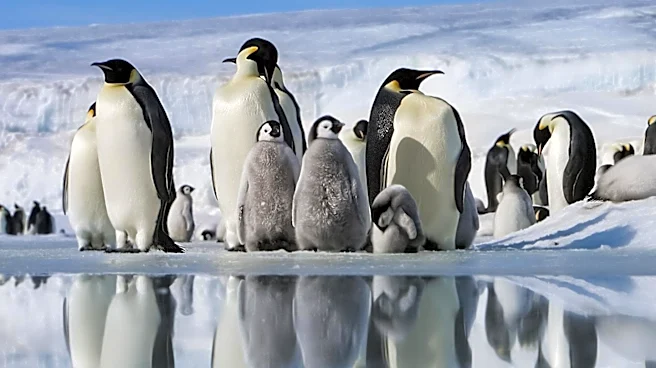
New research indicates that juvenile emperor penguins are encountering industrial krill fishing operations during their critical first year at sea. An international team tracked 48 juvenile emperor penguins from
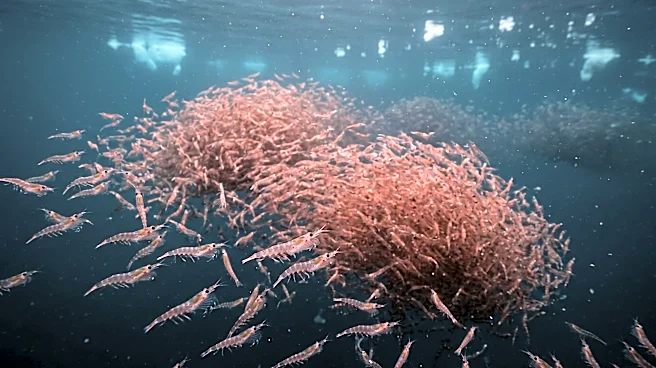
three colonies in the Weddell Sea: Snow Hill Island, Jason Peninsula, and Atka Bay. This study, co-led by France's CNRS, the Centre Scientifique de Monaco, and the Woods Hole Oceanographic Institution, marks the first time juveniles from Snow Hill Island and Jason Peninsula have been tracked. The findings reveal that these young penguins follow predictable migration patterns across the Southern Ocean, spending significant time in areas proposed for marine protected areas (MPAs). Juveniles from Snow Hill Island and Jason Peninsula, in particular, experienced higher levels of fishing activity, primarily for Antarctic krill, a vital food source for emperor penguins. The research, published in the Biological Conservation journal, underscores the urgent need for new MPAs around the Antarctic Peninsula to protect these vulnerable birds.
Why It's Important?
This research is crucial because it highlights a direct conflict between industrial fishing practices and the survival of an endangered species. Emperor penguin populations are already in decline, with predictions of a 50% reduction by the 2080s due to climate change-induced sea ice loss. The added pressure from krill fishing in their foraging grounds further jeopardizes their survival. The study demonstrates that existing MPA planning, which often focuses on adult penguin colonies, fails to adequately protect the sea areas where juveniles spend their vulnerable early years. Establishing MPAs in these predictable and consistently used juvenile foraging grounds would provide significant protection, not only for emperor penguins but also for the broader Antarctic food web, which relies on krill. The findings strengthen the scientific basis for conservation efforts and put pressure on international bodies like the Commission for the Conservation of Antarctic Marine Living Resources (CCAMLR) to act.
What's Next?
The findings are expected to intensify calls for the establishment of new marine protected areas, particularly around the Antarctic Peninsula and in the Weddell Sea. Efforts to create one of the world's largest MPAs in the Weddell Sea have been ongoing for over a decade but have faced repeated failures to reach consensus among CCAMLR member countries. This new data provides compelling evidence that these proposed MPAs are critical for the survival of emperor penguins. Conservation organizations, such as WWF-Australia, will likely leverage this research to advocate more strongly for immediate action from CCAMLR. The focus will be on ensuring that future MPA proposals encompass the crucial foraging grounds identified in this study, thereby offering comprehensive protection for juvenile penguins during their most vulnerable life stage.
Beyond the Headlines
The study's implications extend beyond immediate conservation efforts, touching upon the broader ethical considerations of human impact on fragile ecosystems. The consistent migration patterns of juvenile penguins, observed across different colonies and years, underscore the predictability of their habitat needs, making the case for targeted protection even stronger. The ongoing struggle to establish MPAs in the Antarctic reflects a larger global challenge in balancing economic interests, such as industrial fishing, with ecological preservation. This research also highlights the interconnectedness of species within an ecosystem; protecting emperor penguins, an apex predator, ultimately safeguards the entire Southern Ocean food web. The repeated failure of international bodies to reach consensus on conservation measures, despite clear scientific evidence, raises questions about the effectiveness of current global environmental governance frameworks and the political will to address biodiversity loss.