


What's Happening?
Nine U.S. lawmakers, including Representatives Jonathan Jackson, Raja Krishnamoorthi, Rich McCormick, Young Kim, Derek Tran, Scott Peters, Jimmy Panetta, Sydney Kamlager-Dove, and Suhas Subramanyam, participated in a series of meetings with the United
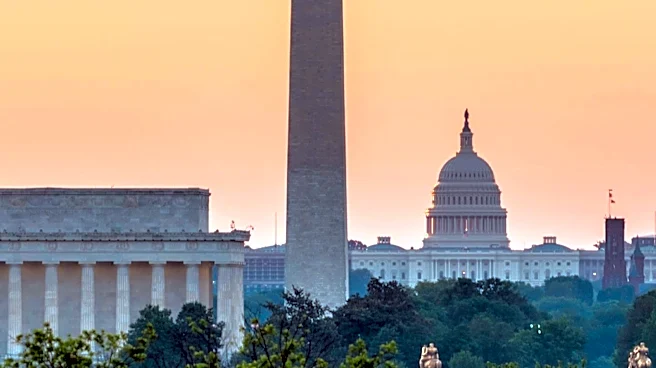
States India Relationship Council (USIRC). These discussions, held on Capitol Hill on August 31 and September 1, focused on deepening strategic ties between Washington and New Delhi. Key topics included trade, defense, the Quad, Indo-Pacific security, and addressing threats from the Chinese Communist Party. Supply-chain resilience, maritime security, and cooperation in space were also part of the agenda, according to USIRC. The USIRC, a registered political action committee, advocates for stronger US-India relations and supports candidates committed to this bilateral partnership, particularly those serving on congressional foreign affairs committees. Representative Kamlager-Dove, ranking Democrat on the House Foreign Affairs subcommittee covering South and Central Asia, emphasized the importance of engaging the diaspora in strengthening bilateral relations.
Why It's Important?
The discussions between U.S. lawmakers and the USIRC underscore a bipartisan commitment to enhancing the strategic partnership between the United United States and India. This relationship is deemed crucial for global stability, particularly in the Indo-Pacific region, given shared concerns about the Chinese Communist Party's influence. Stronger ties could lead to increased cooperation in defense, trade, and technology, benefiting both economies and bolstering regional security. For the U.S., a robust partnership with India, a country projected to become the world's third-largest economy, offers significant economic opportunities and a strategic ally in counterbalancing geopolitical challenges. The emphasis on engaging the Indian American diaspora highlights its growing influence in U.S. foreign policy and its potential to foster deeper cultural and economic links. This collaboration is vital for maintaining a free and open Indo-Pacific and addressing complex global issues collectively.
What's Next?
The ongoing engagement between U.S. lawmakers and advocacy groups like USIRC suggests a continued focus on legislative and diplomatic efforts to solidify the US-India relationship. Future steps may include the introduction of legislation supporting enhanced trade agreements, defense collaborations, and joint initiatives in critical sectors such as space and supply-chain resilience. Lawmakers are likely to continue advocating for policies that strengthen bilateral ties, potentially leading to more frequent high-level dialogues and exchanges. The USIRC's strategy of concentrating advocacy on members of congressional foreign affairs committees indicates a sustained effort to influence policy-making from within the legislative branch. Furthermore, the call for greater political participation from the Indian American community suggests a growing role for diaspora engagement in shaping the future trajectory of this strategic partnership.
Beyond the Headlines
Beyond the immediate policy discussions, the emphasis on the US-India relationship reflects a broader geopolitical realignment. The framing of the two nations as 'natural allies' and the collective addressing of 'threats from the Chinese Communist Party' signal a strategic pivot towards strengthening alliances in the face of evolving global power dynamics. This partnership is not merely transactional but is increasingly viewed as foundational for a stable international order. The role of the Indian American diaspora, highlighted by Representative Kamlager-Dove, points to the growing influence of ethnic communities in shaping U.S. foreign policy, adding a cultural and social dimension to diplomatic efforts. This engagement can foster deeper understanding and trust, moving beyond traditional state-to-state interactions to include people-to-people connections, which are crucial for long-term strategic alignment and resilience against external pressures.