


What's Happening?
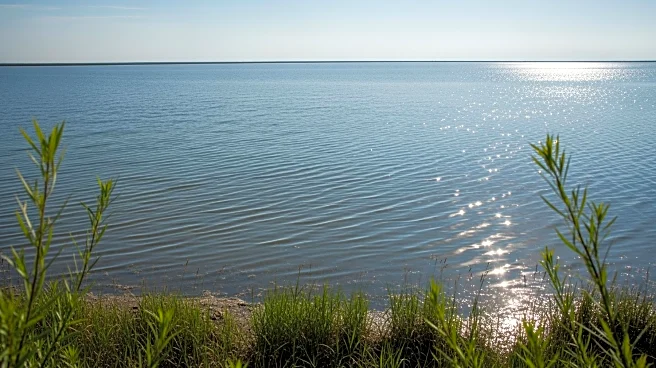
The Great Salt Lake in Utah, which has been shrinking for decades, is the focus of a significant restoration effort aimed at refilling it by 2034. This initiative has garnered support from a diverse group of stakeholders, including Republican state lawmakers,
environmental organizations, and notable figures such as Josh Romney, son of former Senator Mitt Romney. The plan involves a $100 million philanthropic campaign and aims to address the ecological collapse and toxic dust issues caused by the lake's decline. Utah Governor Spencer Cox announced the state's commitment to this goal, coinciding with Salt Lake City's plans to host the Olympic Games in 2034. Recently, President Trump expressed support for the initiative, adding momentum to the cause.
Why It's Important?
The restoration of the Great Salt Lake is crucial due to its environmental and economic implications. The lake's decline has led to toxic dust storms, posing health risks to nearby communities and threatening local ecosystems. Economically, the lake supports industries such as mining and agriculture, which are vital to Utah's economy. The collaborative effort to refill the lake highlights the importance of bipartisan cooperation in addressing environmental challenges. Success in this endeavor could serve as a model for similar ecological restoration projects across the U.S., demonstrating the potential for diverse groups to unite for a common cause.
What's Next?
The plan to refill the Great Salt Lake will require significant reductions in water usage by residents and businesses, particularly in agriculture and mining. This will involve policy changes and possibly new regulations to ensure more water flows into the lake. Stakeholders will need to navigate the challenges of balancing economic interests with environmental needs. The involvement of high-profile figures and the upcoming Olympic Games provide additional pressure to achieve the restoration goals. Continued collaboration and public support will be essential to the project's success.
Beyond the Headlines
The initiative to save the Great Salt Lake also raises broader questions about water management and sustainability in the face of climate change. As water resources become increasingly scarce, the project underscores the need for innovative solutions and long-term planning. It also highlights the role of philanthropy and public-private partnerships in addressing environmental issues. The success or failure of this project could influence future policies and public attitudes towards environmental conservation and resource management.