






What's Happening?
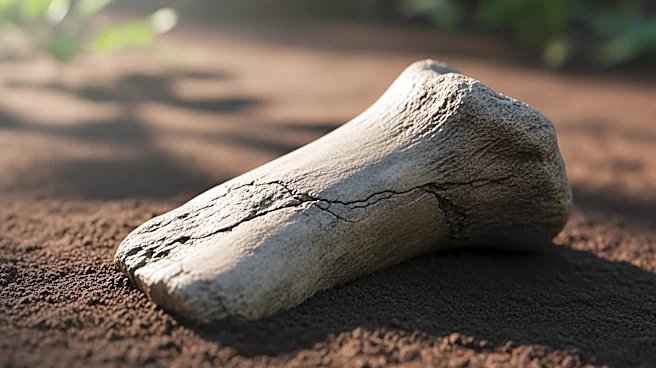
Archaeologists have uncovered the oldest known human remains in northern Britain, belonging to a young girl who died approximately 11,000 years ago. The remains were found in Heaning Wood Bone Cave near Great Urswick on the Furness peninsula. The child,
referred to as the Ossick Lass, was between 2.5 and 3.5 years old at the time of death. Radiocarbon dating places her burial between 9290 and 8925 BC, during the Early Mesolithic period. The discovery was published in the Proceedings of the Prehistoric Society. The burial site included perforated periwinkle shell beads, suggesting a deliberate burial. The cave has been used as a burial site across three prehistoric periods, indicating a long-standing funerary tradition.
Why It's Important?
This discovery provides significant insights into the burial practices and cultural traditions of early human communities in northwestern Europe. The use of the cave over multiple prehistoric periods suggests a shared funerary tradition among different groups, despite genetic turnovers in the region. The findings contribute to the understanding of how early humans perceived death and memory, offering a glimpse into the social and cultural dynamics of Mesolithic societies. The preservation of such ancient remains also highlights the potential for further archaeological discoveries that can reshape historical narratives.
What's Next?
Further analysis of the site and its artifacts may provide additional information about the people who used the cave and their cultural practices. Continued research could explore the genetic makeup of the individuals buried there, offering insights into the population dynamics of prehistoric Britain. The site may also attract more archaeological interest, leading to new excavations and discoveries that could expand the understanding of early human history in the region.
Beyond the Headlines
The discovery raises questions about the continuity of cultural practices across different prehistoric populations. The repeated use of the cave for burials suggests a deep-seated cultural significance attached to the site. This continuity, despite genetic changes, points to the possibility of shared beliefs or traditions that transcended individual communities. The findings also underscore the importance of preserving archaeological sites, as they hold the potential to reveal critical aspects of human history and evolution.