








What's Happening?
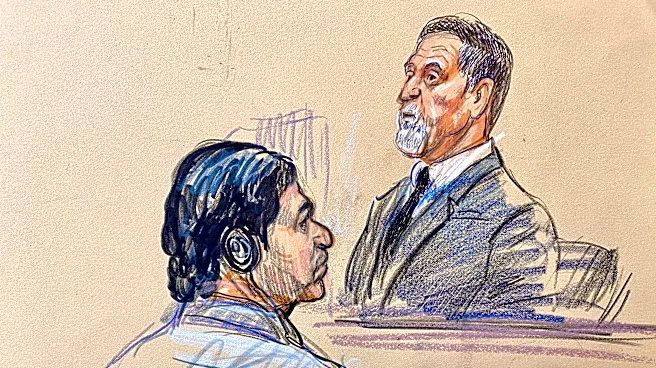
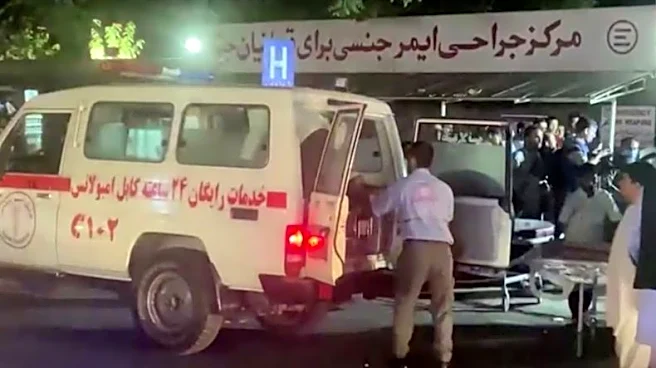
An Afghan national, Mohammad Sharifullah, was convicted of aiding the Islamic State group, which claimed responsibility for the deadly suicide bombing at Kabul airport's Abbey Gate during the U.S. military withdrawal in 2021. The attack resulted in the deaths
of 160 Afghans and 13 U.S. service members. While Sharifullah was found guilty of providing material support to ISIS-K, the jury could not reach a consensus on his direct involvement in the bombing, which could have led to a life sentence. The trial highlighted the chaotic nature of the U.S. withdrawal and the complexities of attributing responsibility for the attack.
Why It's Important?
The conviction underscores ongoing concerns about global terrorism and the challenges in prosecuting individuals linked to such acts. The case also reflects the broader geopolitical implications of the U.S. withdrawal from Afghanistan, which has been a point of contention in U.S. politics. The inability to conclusively link Sharifullah to the bombing highlights the difficulties in gathering evidence in conflict zones and the potential for miscarriages of justice. This case may influence future U.S. counterterrorism strategies and legal approaches to international terrorism.
What's Next?
Sharifullah faces a maximum sentence of 20 years, with sentencing yet to be scheduled. The case may prompt further scrutiny of the U.S. withdrawal strategy and its aftermath. It could also lead to discussions on improving intelligence and military operations in similar future scenarios. The outcome may affect U.S. relations with Afghanistan and influence domestic political debates on national security and foreign policy.