






What's Happening?
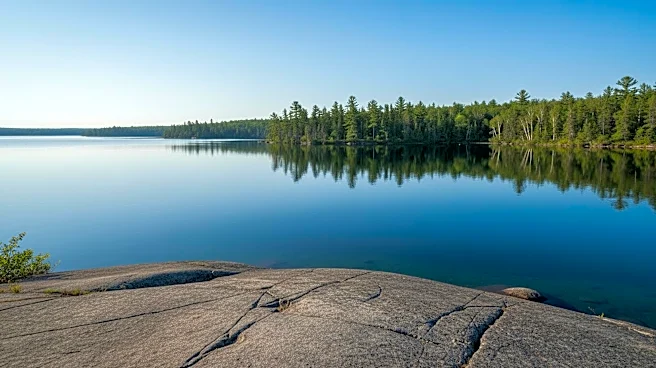
Minnesota Governor Tim Walz signed an executive order on Tuesday, effectively banning nonferrous mining in the Rainy River Watershed, which encompasses the Boundary Waters Canoe Area Wilderness. This action marks a significant victory for environmentalists
and Native American tribes who have long sought to protect the pristine wilderness from the potential ecological damage of mining. The order specifically prohibits the Department of Natural Resources (DNR) and the Minnesota Pollution Control Agency from conducting environmental reviews or issuing permits for nonferrous mining projects in the designated watershed. It also prevents the DNR from offering new state nonferrous mineral leases or partnering with the federal government on mining proposals in the area. This move is expected to directly impact proposed projects like Twin Metals, a subsidiary of Antofagasta, which aimed to extract copper, nickel, and other metals near Ely and Babbitt, just miles from the wilderness area. Governor Walz stated that this decision aims to definitively end the decades-long conflict over mining in the region, asserting that the area will be protected permanently.
Why It's Important?
Governor Walz's executive order carries substantial environmental and economic implications for Minnesota. Environmentally, it safeguards one of the United States' most cherished wilderness areas, known for its clean water and unique ecosystem, from the risks associated with nonferrous mining, such as acid mine drainage and water pollution. This protection aligns with the values of many Minnesotans and conservation groups who view the Boundary Waters as an irreplaceable natural resource. Economically, the order effectively halts potential mining projects that promised high-paying jobs and economic diversification for northeastern Minnesota, a region historically reliant on iron ore mining. Mining interests, including Twin Metals and lobbying groups like MiningMinnesota, argue that these projects would reduce economic dependence on volatile global markets and provide valuable metals for modern technologies. The ban, however, supports the growing tourism industry around the Boundary Waters, which some estimates suggest could exceed the economic benefits of mining. The executive order also highlights the tension between resource extraction and environmental preservation, a recurring theme in U.S. land use policy, and sets a precedent for state-level action in protecting critical natural areas.
What's Next?
The executive order, while significant, is likely to face immediate challenges. Mining interests, including Twin Metals and industry lobbying groups, have indicated a strong possibility of litigation, arguing that the order lacks legal standing and precedence. They contend that the governor's action is a political decision rather than an environmental one. Furthermore, as an executive order, its permanence is not guaranteed; a future governor could overturn it with a simple signature. This injects the issue directly into future gubernatorial campaigns, with candidates already taking stances for or against the ban. Governor Walz is also directing the DNR to draft legislation to permanently prohibit nonferrous mining in the watershed, which would require legislative approval and could be a challenging endeavor given the divided political landscape and the support for mining among some northern Minnesota Democrats. U.S. Representative Pete Stauber, a Republican representing the affected district, has already criticized the order as 'radical' and detrimental to union jobs and school funding, indicating potential federal-level opposition or attempts to counteract the state's ban.
Beyond the Headlines
The executive order banning nonferrous mining near the Boundary Waters delves into deeper ethical and cultural dimensions, reflecting a societal shift towards prioritizing environmental conservation over immediate economic gains from resource extraction. The Boundary Waters holds a central place in Minnesota's collective imagination, embodying a spiritual and recreational value that transcends its material resources. Governor Walz's personal connection to the area underscores the emotional weight of this decision. The conflict also highlights the complex relationship between state and federal authority over land use, especially in areas with both state and federal protections. The order's potential to trigger litigation from powerful international mining conglomerates raises questions about corporate influence on environmental policy and the ability of states to assert their sovereignty over natural resources. Moreover, the involvement of Native American tribes, who commend the order for upholding treaty obligations to protect their traditional homelands, brings to light the historical injustices and ongoing struggles for indigenous land rights and environmental justice. This decision is not merely about mining; it's about defining the future of a cherished landscape and the values that will guide its stewardship for generations to come.