


What's Happening?
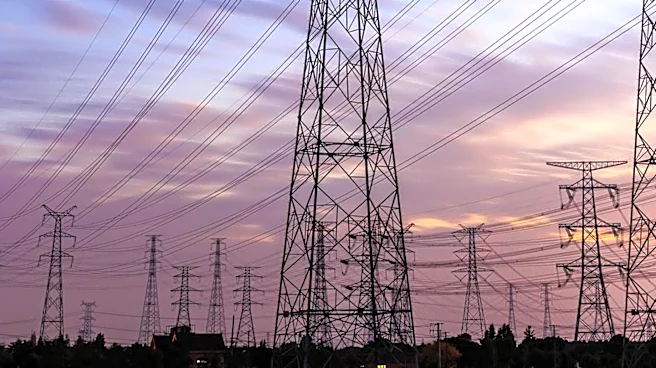
Hawaii has been awarded $18.5 million in federal funding to bolster its electrical grids against natural disasters such as wildfires and hurricanes. This federal support, channeled through FEMA’s Hazard Mitigation Grants Program and the Building Resilient
Infrastructure and Communities program, will contribute to a larger $25 million investment initiative. The state is collaborating with Hawaiian Electric and the Hawaii Emergency Management Agency (HIEMA) to execute five significant resilience projects between 2027 and 2029 across Maui, Oahu, and Hawaii Island. A key component of this initiative involves establishing five 'Critical Customer Hubs' at locations like the Lahaina Civic Center, Lahaina Cannery Mall, and Windward Mall, designed to ensure essential public facilities remain operational during prolonged power outages. These hubs will support critical services such as police and fire stations, medical clinics, pharmacies, and grocery stores. Additionally, the funding will facilitate technological upgrades, including Distribution Digital Twin Modeling for early power quality issue detection, Energy Management System Platform Modernization for real-time monitoring on Maui and Hawaii Island, and West Maui Grid Hazard Mapping to identify vulnerabilities.
Why It's Important?
This federal funding is crucial for Hawaii, a state highly susceptible to natural disasters, as it directly addresses the vulnerability of its energy infrastructure. The establishment of Critical Customer Hubs will significantly enhance community resilience by guaranteeing that essential services can continue functioning during widespread power disruptions, thereby protecting public safety and welfare. The technological upgrades, such as digital twin modeling and enhanced energy management systems, will improve the grid's ability to detect and respond to issues, potentially preventing large-scale outages and reducing recovery times. This proactive approach to infrastructure hardening is vital for Hawaii's economy, which relies heavily on stable utilities for tourism, local businesses, and daily life. The investment also signals a broader national trend towards climate change adaptation and disaster preparedness, with federal agencies recognizing the need to support states in building more resilient infrastructure. For residents, it means greater security and continuity of essential services in the face of increasing climate-related threats.
What's Next?
The five major resilience projects are slated for implementation between 2027 and 2029. Hawaiian Electric, in partnership with the state and HIEMA, will proceed with the development of the Critical Customer Hubs and the technological upgrades. These efforts will involve detailed planning, procurement, and construction phases. Colton Ching, Hawaiian Electric’s Senior Vice President of Planning and Technology, indicated that the collaborative effort aims to create stronger, more resilient electric systems and improve safety, including the capability to rapidly de-energize lines during emergencies. HIEMA Administrator David Lopez emphasized that securing this funding is a critical step in maintaining essential services. The ongoing work will likely involve public outreach and coordination with local communities to ensure the effective deployment of these resilience measures and to inform residents about the benefits and any potential temporary disruptions during construction.
Beyond the Headlines
The initiative highlights a growing recognition of the interconnectedness between climate change, infrastructure resilience, and community well-being. Beyond the immediate benefits of a more robust power grid, this investment could serve as a model for other regions facing similar environmental challenges. The focus on 'Critical Customer Hubs' reflects a strategic shift towards ensuring societal continuity, not just infrastructure repair, in disaster planning. This approach acknowledges that power outages have cascading effects on public health, economic activity, and social stability. Furthermore, the integration of advanced technologies like digital twin modeling signifies a move towards predictive and preventative maintenance, leveraging data and simulation to enhance grid reliability. This could foster innovation in energy management and disaster response, potentially leading to more sustainable and adaptive infrastructure solutions nationwide. The long-term implications include reduced economic losses from disasters, improved quality of life for residents, and a more secure energy future for Hawaii.