






What's Happening?
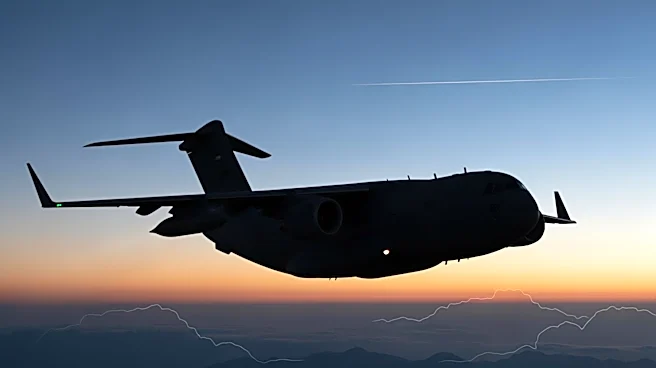
The United Arab Emirates (UAE) has signed a significant deal with Brazilian aerospace company Embraer for the purchase of 20 C-390 military transport aircraft. This agreement, which includes 10 firm orders and options for 10 additional aircraft, marks
Embraer's largest C-390 order to date and its first sale in the Middle East. The UAE's Tawazun Council for Defence Enablement finalized the deal, aiming to enhance the country's military airlift and humanitarian assistance capabilities. The C-390s will be used for various missions, including cargo and troop transport, airdrop logistics, and medical evacuation. This contract represents a strategic enhancement of the UAE's military readiness and operational efficiency.
Why It's Important?
This deal is a significant milestone for Embraer, expanding its presence in the Middle East and marking a major win for its defense sector. For the UAE, the acquisition of the C-390s enhances its military capabilities, allowing for more efficient and versatile airlift operations. This move aligns with the UAE's broader strategy to modernize its military forces and increase its regional influence. The deal also reflects the growing demand for advanced military transport solutions globally, as countries seek to bolster their defense capabilities amid evolving security challenges. The partnership with Embraer may lead to further collaborations, potentially influencing regional defense dynamics.
What's Next?
Following this agreement, Embraer is expected to focus on delivering the C-390s to the UAE, ensuring integration with existing systems and providing ongoing support. The successful execution of this contract could open doors for additional sales in the Middle East and beyond, as other countries observe the UAE's enhanced capabilities. Embraer may also continue to pursue opportunities in the U.S. market, leveraging its partnership with Northrop Grumman to develop new capabilities for the C-390. For the UAE, the expanded airlift capacity will likely play a crucial role in its military and humanitarian operations, potentially influencing its strategic posture in the region.