







What's Happening?
The U.S. Space Force is preparing to award follow-on contracts for its Resilient-GPS (R-GPS) program. This development comes after Congress appropriated an additional $15 million to sustain the program, which the Space Force had initially opted not to fund
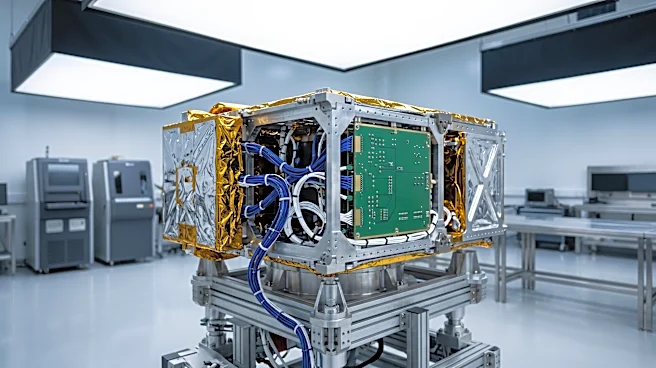
in its fiscal 2027 budget request. The R-GPS program, initiated by former Air Force Secretary Frank Kendall in 2024, aims to deploy an initial constellation of eight small satellites by 2028. These satellites are designed to provide position, navigation, and timing (PNT) services from medium Earth orbit, operating independently yet complementarily to the existing GPS constellation. The new contracts will be awarded to the current vendors: Astranis, L3Harris Technologies, and Sierra Space. According to Col. Neil Barnas, System Delta 381 commander at Space Systems Command, these awards will prioritize 'high-risk technologies associated with this future space segment,' specifically mentioning reprogrammable space-based cryptographic devices and advanced monitoring concepts explored under the R-GPS program.
Why It's Important?
The continuation of the Resilient-GPS program is crucial for enhancing the robustness and security of U.S. national security infrastructure. By developing a separate yet complementary PNT system, the Space Force aims to mitigate vulnerabilities inherent in relying solely on the current GPS constellation, which could be susceptible to jamming or disruption by adversaries. The focus on 'high-risk technologies' like reprogrammable cryptographic devices signifies a strategic effort to build more adaptable and secure space assets, essential for maintaining technological superiority in an increasingly contested space domain. This initiative also supports the U.S. defense industrial base by providing continued contracts to key aerospace and defense technology companies, fostering innovation and expertise in critical space capabilities. The program's emphasis on serving a broader range of users, from one-way drones to space-based sensors, underscores the evolving demands on PNT services across military and potentially civilian applications.
What's Next?
The Space Force expects to award the new R-GPS contracts 'shortly,' focusing on advancing key technologies for future space architecture. Concurrently, the service is in the early stages of developing its next-generation GPS architecture, known as Gen4. This involves an upcoming industry day to initiate a new ground segment, followed by a focus on space requirements. While a specific timeline for finalizing the Gen4 architecture is not yet established, the Space Force is undertaking a comprehensive review of PNT requirements at the user level, acknowledging the expanding applications of GPS in systems like commercial one-way drones and on-orbit assets. The ongoing production of GPS III Follow-On (IIIF) satellites by Lockheed Martin, with the first vehicle entering thermal and acoustics testing, indicates a continuous effort to upgrade and expand the existing GPS infrastructure alongside the development of resilient alternatives.
Beyond the Headlines
The sustained investment in resilient PNT capabilities reflects a broader strategic shift within the U.S. military to prepare for potential conflicts in the space domain. The development of systems like R-GPS highlights a recognition that space assets are no longer merely support functions but potential targets and battlegrounds. This push for redundancy and advanced cryptographic measures underscores the increasing sophistication of electronic warfare threats and the need for robust, secure communication and navigation systems. The integration of reprogrammable cryptographic devices suggests a move towards more dynamic and adaptable security protocols, allowing for rapid updates and countermeasures against evolving threats. This long-term vision aims to ensure uninterrupted access to critical PNT data, which is fundamental not only for military operations but also for a wide array of civilian infrastructure, including transportation, finance, and communication networks, making its resilience a matter of national economic and security interest.