



What's Happening?
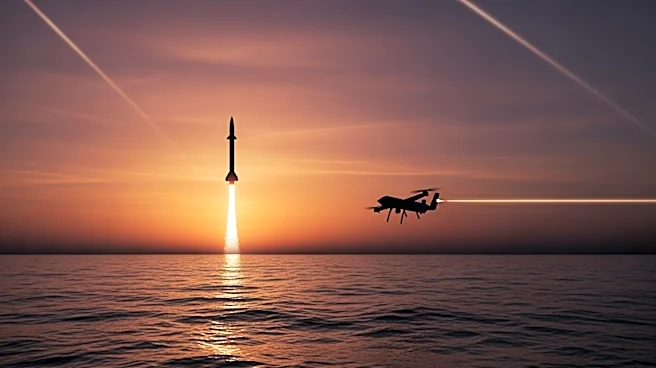
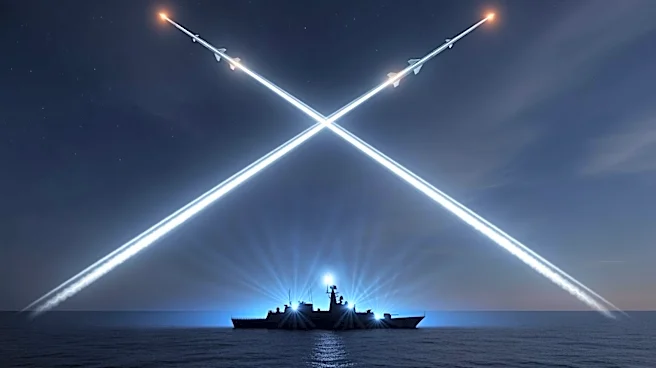
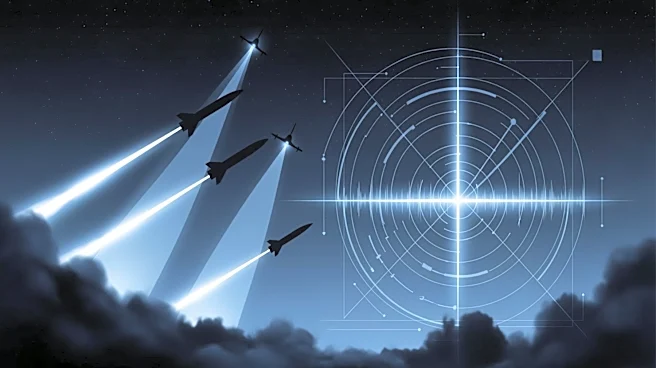
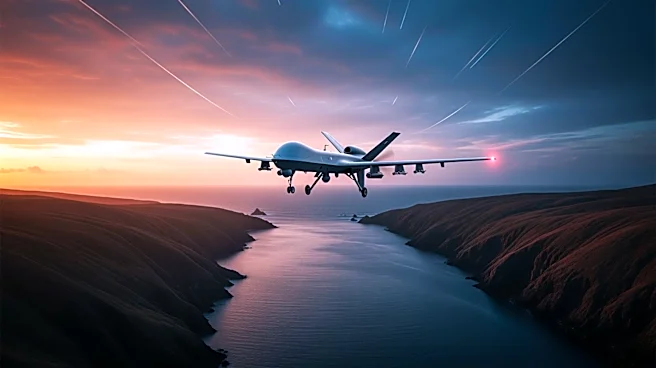
The U.S. military has successfully intercepted Iranian ballistic missiles and drones that were launched towards the Strait of Hormuz and Gulf Arab allies, including Kuwait and Bahrain. This military action comes as part of an ongoing exchange of fire
that has further strained the already fragile ceasefire between the U.S. and Iran. According to U.S. Central Command, seven ballistic missiles were fired by Iran, with six being intercepted and the seventh failing to reach its target. Additionally, four Iranian drones were shot down earlier in the day. The U.S. military also targeted Iranian coastal surveillance radar sites in response to these attacks. The situation has escalated tensions in the region, with Kuwait and Bahrain taking defensive measures, including activating air raid sirens and advising residents to seek safety.
Why It's Important?
This development is significant as it highlights the ongoing volatility in the Middle East, particularly concerning U.S.-Iran relations. The interception of missiles and drones underscores the U.S. military's commitment to protecting its interests and allies in the region. The situation also poses potential risks to global oil and natural gas shipments, as the Strait of Hormuz is a critical corridor for these resources. Any disruption could lead to increased energy prices, affecting global markets and economies. Furthermore, the escalation of military actions could impact diplomatic efforts to reach a long-term ceasefire and address broader issues such as Iran's nuclear program. The U.S. administration's handling of this conflict may also have domestic political implications, especially with upcoming elections.
What's Next?
The future of U.S.-Iran relations remains uncertain, with potential for further military engagements if tensions continue to rise. Diplomatic efforts to extend the ceasefire and negotiate a deal on Iran's nuclear program are ongoing, but progress has been slow. The U.S. administration may face pressure to find a resolution that ensures regional stability while addressing security concerns. Additionally, the international community will likely monitor the situation closely, as any escalation could have broader geopolitical consequences. The U.S. may also continue to enforce economic sanctions and military blockades to pressure Iran into compliance with international agreements.