







What's Happening?
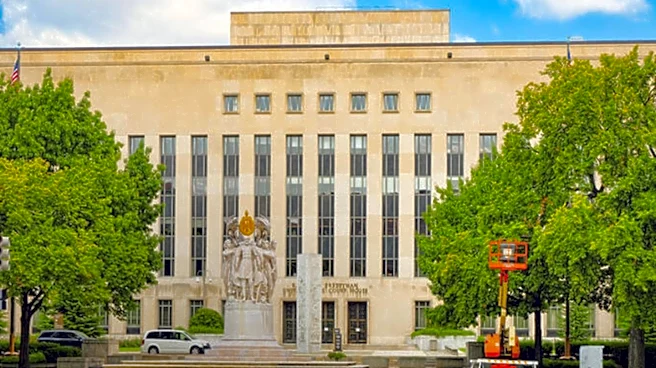
New federal guidance from the U.S. Department of Justice (DOJ) is raising concerns among advocates and researchers regarding its potential impact on special education transition services for students with disabilities. In June, the DOJ stated it would
no longer rely on its previous 'Olmstead Guidance' in enforcing the Americans with Disabilities Act (ADA), declaring it 'not enforceable.' This move is seen as a significant shift from the 1999 Supreme Court ruling in Olmstead v. L.C., which mandated that states eliminate unnecessary segregation of people with disabilities and provide services in the 'most integrated setting appropriate.' For decades, the Olmstead ruling has underpinned individualized education programs (IEPs) for students with disabilities, requiring transition plans that teach independent living skills for those aged 16 and older. Critics, including three Democratic congressmen—Bobby Scott, Jamie Raskin, and Frank Pallone—have demanded the DOJ rescind the new guidance, calling it an 'insult to people with disabilities' and a 'stunning reversal of decades of effort' to enforce integration.
Why It's Important?
This new DOJ guidance is significant because it could undermine decades of progress in preparing students with disabilities for independent living, postsecondary education, and employment. The Olmstead ruling has been a cornerstone of special education, ensuring that transition plans focus on integrating individuals with disabilities into their communities. By stating that the Olmstead Guidance is 'not enforceable,' the DOJ sends a confusing message to school districts and educators. While the underlying law of Olmstead v. L.C. has not been overturned, the change in enforcement posture could lead to a misinterpretation that segregated living is acceptable and that integrated settings are no longer a priority. This could potentially reverse the emphasis on teaching daily living skills crucial for independent community participation, impacting the quality of life and opportunities for young adults with disabilities. Advocates fear that this shift could lower expectations for students with disabilities and make it harder for them to achieve full inclusion in society.
What's Next?
The immediate future will likely involve continued pressure from civil rights advocates, educators, and lawmakers for the DOJ to clarify or rescind its new guidance. The letter from the three Democratic congressmen indicates a political challenge to the DOJ's stance. School districts and special education professionals will need to navigate this new guidance, potentially seeking clarification on how it impacts their obligations under the Individuals with Disabilities Education Act (IDEA) and the ADA. There is a risk that, without clear direction, some schools might interpret the guidance as permission to reduce efforts toward integrated transition planning. The Department of Justice has not yet responded to requests for comment, and the White House press office referred questions to the DOJ, suggesting that further official statements or clarifications may be forthcoming. The ongoing dialogue will determine whether the emphasis on integrated settings for individuals with disabilities remains a central tenet of federal policy.
Beyond the Headlines
The deeper implications of this DOJ guidance touch upon the philosophical underpinnings of disability rights and inclusion in the United States. The concept of 'the most integrated setting appropriate' is not just a legal phrase but a societal value that promotes dignity, autonomy, and equal opportunity for individuals with disabilities. By seemingly stepping back from this principle, the DOJ's action could inadvertently reinforce outdated notions of segregation and institutionalization. This could have long-term cultural and ethical consequences, potentially shifting public perception and policy away from inclusive practices. The guidance also highlights the ongoing tension between federal enforcement priorities and the lived experiences of individuals with disabilities and their families. The concern is that a perceived weakening of federal commitment could embolden those who prefer more restrictive environments, thereby eroding the hard-won gains of the disability rights movement and impacting the fundamental right of individuals to live, work, and learn in their communities.