
What's Happening?
The NASA National Snow and Ice Data Center Distributed Active Archive Center (NSIDC DAAC) has released a new data set titled 'SnowEx20 Grand Mesa Airborne SWESARR Calibrated Backscatter Intensity, Version
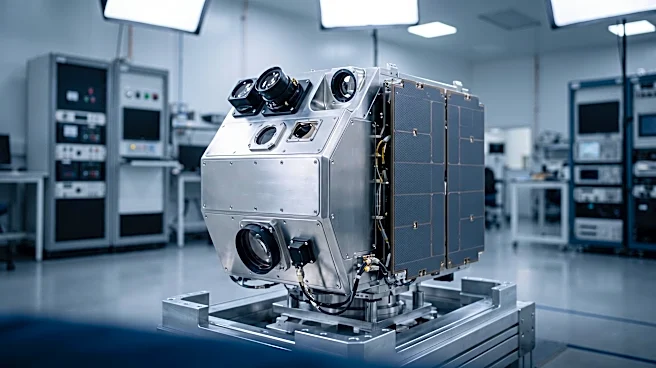
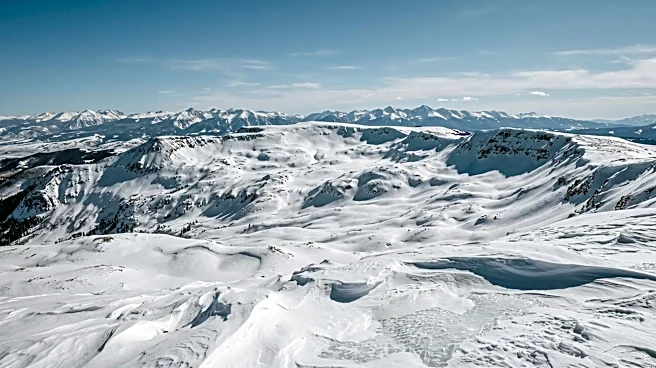
1.' This data set comprises calibrated airborne microwave observations gathered by the Goddard Space Flight Center's SWESARR (Snow Water Equivalent Synthetic Aperture Radar and Radiometer) instrument. The observations were collected during the SnowEx 2019-2020 field campaign, specifically in Grand Mesa, Colorado. The temporal range of the data spans from November 5, 2019, to February 12, 2020. This release provides detailed information on snow water equivalent, a critical parameter for understanding water resources and climate patterns. The data set is now publicly accessible through the NSIDC DAAC, offering researchers and scientists valuable insights into snowpack characteristics.
Why It's Important?
This new data set is significant for several reasons, primarily for its contribution to climate science and water resource management in the U.S. Accurate measurements of snow water equivalent (SWE) are crucial for predicting water availability, especially in regions like the Western United States that rely heavily on snowmelt for their water supply. The data from Grand Mesa, a key study site, will help improve models for snowpack evolution, melt rates, and overall water budget predictions. This can inform agricultural planning, drought monitoring, and flood forecasting, directly impacting communities and industries dependent on water resources. Furthermore, the calibrated microwave observations offer a more precise understanding of snow properties, which can lead to advancements in remote sensing technologies for snow measurement.
What's Next?
The release of the SnowEx20 Grand Mesa data set is expected to facilitate further research and analysis within the scientific community. Researchers will likely utilize this data to validate existing snow models, develop new algorithms for remote sensing of snow, and enhance understanding of snow-atmosphere interactions. This could lead to improved operational snow products and forecasts from agencies like the National Weather Service. The data may also contribute to broader climate change studies, helping to assess long-term trends in snowpack variability and its implications for regional hydrology. Future SnowEx campaigns and data releases will build upon these findings, continually refining our ability to monitor and predict snow-related phenomena.
Beyond the Headlines
The availability of this highly specialized data set underscores the ongoing efforts in scientific collaboration and open data sharing, which are fundamental to addressing complex environmental challenges. The SnowEx program itself is a multi-agency, multi-national effort aimed at improving snow remote sensing capabilities, highlighting the collaborative nature of modern scientific inquiry. The detailed microwave observations provided by SWESARR offer a unique perspective on snowpack structure that traditional methods might miss, potentially revealing subtle changes in snow density and layering. This could have implications for understanding avalanche risk and the ecological impacts of snow cover on vegetation and wildlife, extending the utility of the data beyond just water resource management.