






What's Happening?
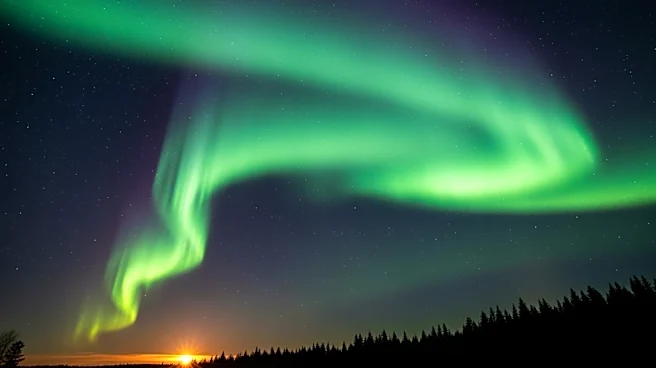
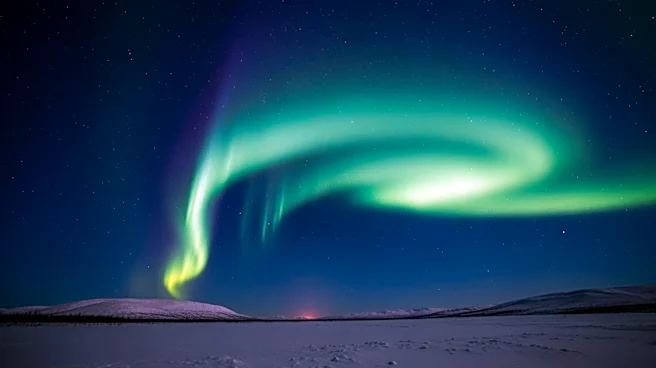
A significant solar storm is expected to create a spectacular display of the northern lights, visible across parts of the United States. According to NOAA's Space Weather Prediction Center, a high-speed solar wind from a coronal hole is anticipated to trigger
geomagnetic activity, potentially resulting in a G1 to G2 geomagnetic storm. This event could make the aurora borealis visible in regions as far south as Michigan, New York, and northern Ohio. The peak viewing time is expected to be overnight between May 7 and May 8, offering a rare opportunity for many to witness this natural phenomenon.
Why It's Important?
The occurrence of the northern lights in lower latitudes is a rare event, providing a unique opportunity for millions of Americans to experience this natural wonder. Such events can boost local tourism and interest in astronomy, as people travel to areas with optimal viewing conditions. Additionally, the increased geomagnetic activity serves as a reminder of the dynamic nature of space weather and its potential impacts on satellite communications and power grids. Understanding and predicting these phenomena are crucial for mitigating potential disruptions.
What's Next?
As the solar storm progresses, NOAA and other space weather agencies will continue to monitor its effects and provide updates on viewing conditions. For those interested in observing the northern lights, finding locations with minimal light pollution and clear skies will be essential. The event may also prompt further research into the effects of solar activity on Earth's atmosphere and technology. In the long term, advancements in space weather forecasting could improve preparedness for similar events in the future.