




What's Happening?
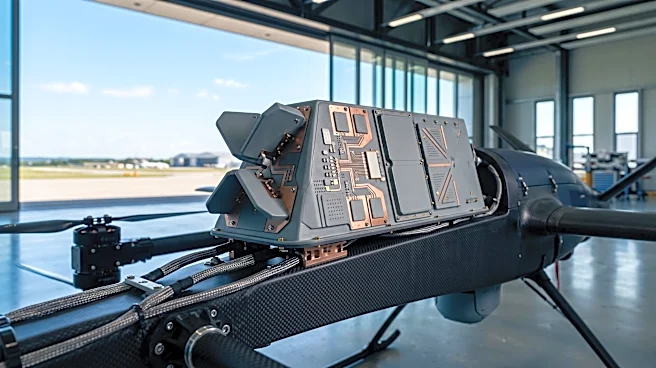
The Pentagon’s technology chief stated in October that the United States was caught unprepared for the current era of drone warfare. While the U.S. possesses a stockpile of approximately 500,000 drones, Ukraine anticipates manufacturing between 8 million
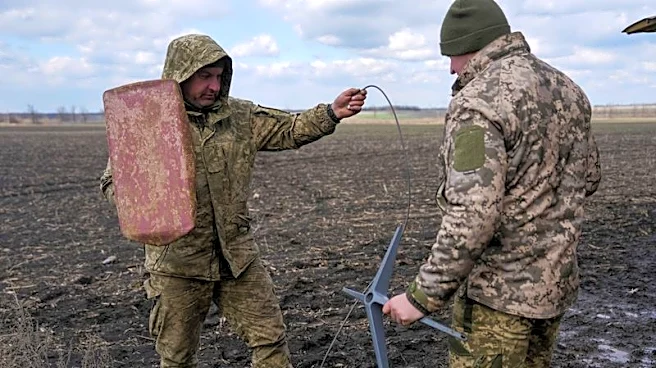
and 10 million drones this year. This significant disparity, though comparing a stockpile to annual production, highlights a critical lesson in modern defense economics: the importance of rapid production, adaptation, and replacement of weapons. Ukraine's experience demonstrates a combat-driven economic model where systems are quickly manufactured, routinely lost, redesigned based on battlefield feedback, and rapidly returned to the front lines in new iterations. This speed of feedback between soldiers, engineers, and factories is proving more crucial than the sophistication of individual airframes.
Why It's Important?
This acknowledgment from a senior Pentagon official underscores a strategic vulnerability for the U.S. in an evolving global defense landscape. The U.S. military's traditional focus on highly advanced, expensive systems may be less effective against adversaries capable of mass-producing cheaper, adaptable drones. This economic asymmetry could lead to a 'cost-exchange ratio' disadvantage, where an attacker's inexpensive drones force a defender to expend costly interceptors. For U.S. defense industries, this implies a need to re-evaluate procurement strategies, potentially shifting towards more agile manufacturing processes and investing in cost-effective defensive measures. The lesson from Ukraine suggests that the ability to rapidly innovate and produce at scale is becoming as vital as technological superiority, impacting U.S. military readiness and its ability to sustain prolonged conflicts.
What's Next?
The U.S. will likely need to accelerate its efforts to adapt to this new reality of drone warfare. This could involve significant investments in domestic drone production capabilities, fostering a more competitive and innovative defense industrial base, and streamlining procurement processes to allow for faster iteration and deployment of new technologies. There may also be a push for greater collaboration with allies, including Ukraine, to learn from their battlefield experiences and integrate their rapid production models. Furthermore, the U.S. defense strategy might shift to prioritize the development of cheaper, more numerous defensive systems, such as interceptor drones or laser-based defenses, to counter the economic challenge posed by mass-produced adversary drones. This could also lead to a re-evaluation of military doctrine to better integrate drone swarms and counter-drone tactics.
Beyond the Headlines
The disparity in drone production capacity highlights a broader challenge for established military powers: balancing technological superiority with industrial agility and cost-effectiveness. This situation could trigger a fundamental re-thinking of defense economics, moving away from solely focusing on 'exquisite' weapons towards a more diversified approach that includes high-volume, rapidly deployable, and adaptable systems. The ethical implications of widespread drone warfare, including autonomous decision-making and the potential for increased civilian casualties, will also become more prominent. Moreover, the ease of drone production and proliferation could democratize warfare, making advanced military capabilities accessible to a wider range of state and non-state actors, thereby complicating global security dynamics and requiring new international regulations.