








What's Happening?
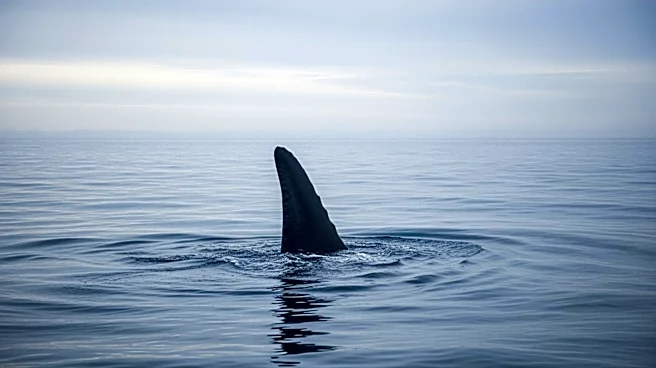
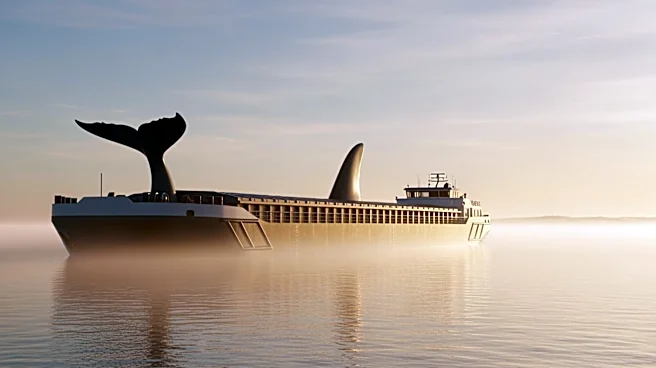
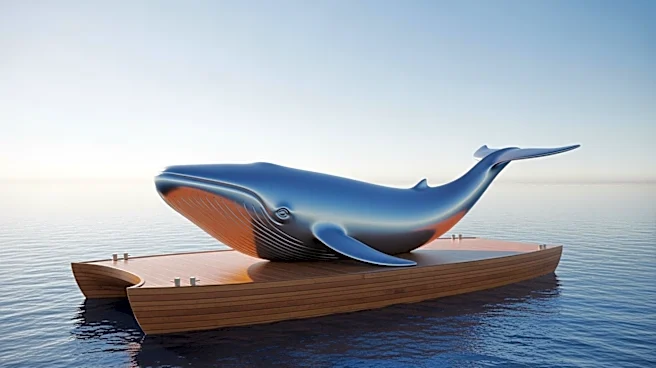
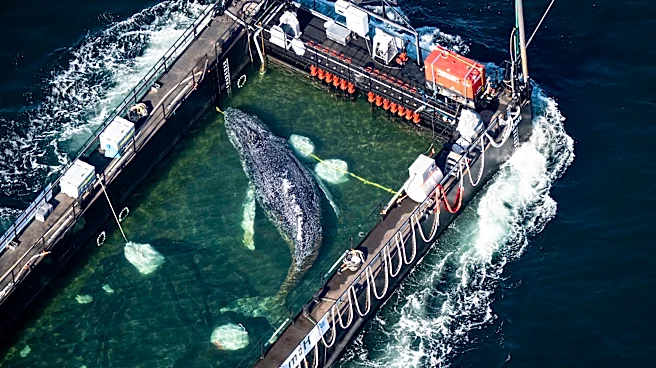
Timmy, a humpback whale stranded in shallow waters near Germany, was successfully released into the North Sea after several weeks. The rescue, funded by two German millionaires, involved a massive, water-filled barge to transport the whale. This was the fifth
attempt to return Timmy to deeper waters. The International Whaling Commission (IWC) has expressed concerns about the whale's health, noting that the stress of prolonged stranding and transport could have serious physiological effects. The IWC plans to monitor Timmy's recovery using data from a transmitter attached before his release.
Why It's Important?
Timmy's rescue highlights the challenges and complexities involved in marine animal conservation efforts. While the successful release is a positive outcome, experts caution that the whale's health may still be compromised. This situation underscores the need for careful consideration of the risks and benefits of intervention in wildlife rescues. The data collected from Timmy's transmitter will provide valuable insights into the effectiveness of such rescue missions and inform future efforts. The case also draws attention to the broader issue of marine animal strandings and the impact of human activities on marine ecosystems.
What's Next?
The IWC will continue to monitor Timmy's progress in the wild, assessing his ability to swim, feed, and regain health. The data collected will help refine rescue strategies for future stranded marine animals. Meanwhile, the public and conservation groups will likely follow Timmy's journey closely, hoping for a successful recovery. The situation may also prompt discussions on improving rescue protocols and addressing the underlying causes of marine animal strandings, such as environmental changes and human interference.