








What's Happening?
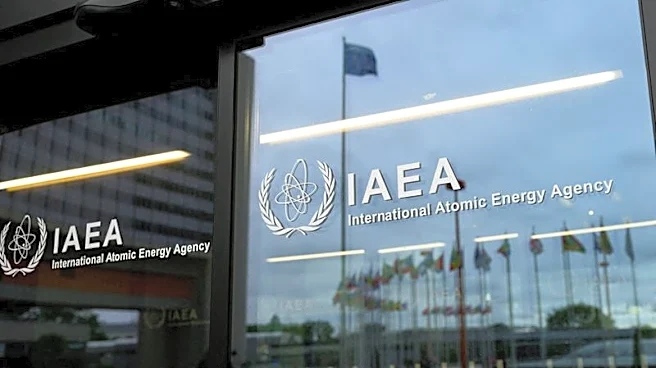
The United Nations' atomic watchdog, the International Atomic Energy Agency (IAEA), has passed a resolution demanding that Iran fully cooperate with the agency. This includes providing complete information about its stockpile of near weapons-grade nuclear
material and granting inspectors access to Iranian nuclear sites. The resolution, supported by 21 countries on the IAEA's 35-member board, emphasizes the urgency of these actions to ensure there is no diversion of nuclear material. The resolution was introduced by France, the United Kingdom, Germany, and the United States. It comes amid heightened tensions in the Middle East, following U.S. airstrikes against Iran and retaliatory actions by Tehran. Iran has not allowed IAEA inspectors access to nuclear sites affected by previous strikes, despite being legally obliged under the Nuclear Nonproliferation Treaty. The IAEA has been unable to verify the status of Iran's uranium stockpile, which could potentially allow the country to build nuclear weapons.
Why It's Important?
This development is significant as it underscores the ongoing international concern over Iran's nuclear capabilities and the potential for nuclear proliferation in the Middle East. The resolution aims to maintain diplomatic pressure on Iran to comply with its legal obligations, which is crucial for regional and global security. The inability of the IAEA to verify Iran's nuclear activities raises concerns about the country's intentions and the possibility of it developing nuclear weapons. This situation could lead to increased tensions and instability in the region, affecting global oil markets and international relations. The resolution also highlights the challenges faced by international bodies in enforcing compliance with nuclear agreements, which is vital for maintaining global nonproliferation norms.
What's Next?
The resolution leaves open the possibility of further action, including referring Iran to the U.N. Security Council for additional sanctions if noncompliance continues. This could escalate diplomatic tensions and lead to broader international involvement. The IAEA board has indicated its readiness to take further steps, which may include a formal noncompliance report. The outcome of these actions will depend on Iran's response and willingness to engage with the IAEA. The international community will be closely monitoring the situation, as any escalation could have significant geopolitical and economic repercussions.