





What's Happening?
Biosphere Expeditions has concluded its 15th annual coral reef conservation expedition in the Maldives, revealing unexpected resilience in some reef systems despite the looming threat of an El Niño event. Preliminary results indicate that Maldivian reefs
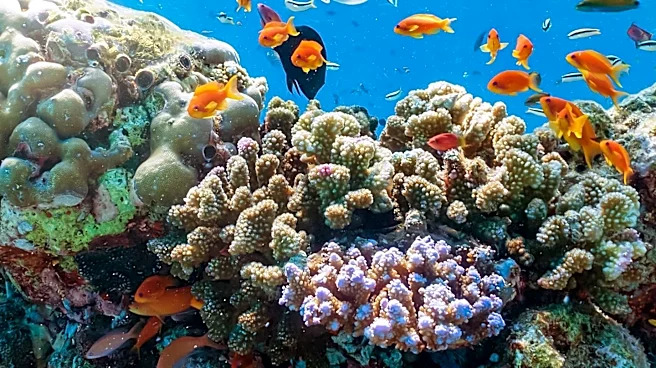
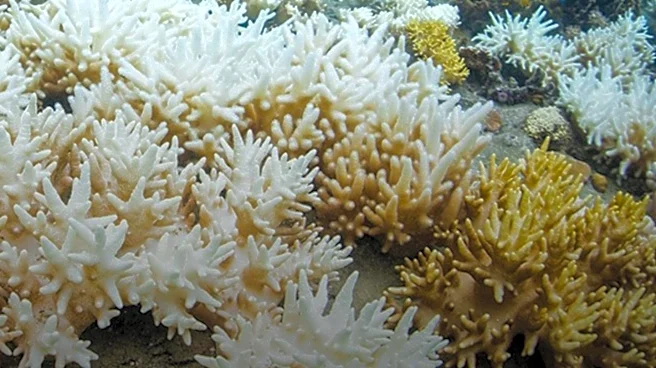
are in a better state than anticipated. Notably, a reef in North Male’ Atoll, which had previously degraded from hard corals to brown corallimorphs, is now showing signs of recovery with encouraging coral patches returning. This recovery defies earlier expectations and suggests a natural capacity for marine ecosystems to rebound even under persistent stress. However, these positive local findings are overshadowed by an approaching intense El Niño event, projected to peak around December and January, which threatens widespread and catastrophic coral bleaching across the Maldives and global coral reef communities.
Why It's Important?
The unexpected resilience observed in Maldivian coral reefs offers a glimmer of hope for marine conservation efforts globally, suggesting that some ecosystems may possess an inherent capacity for recovery. This is particularly significant given the dire outlook for marine biodiversity and reef persistence worldwide, as highlighted by recent United Nations reports. The findings could inform future conservation strategies, focusing on identifying and protecting resilient reef habitats. However, the impending El Niño event poses a substantial threat, potentially negating these fragile gains. The transition of scientific leadership to Shaha Hashim, a local Maldivian, signifies a crucial step towards empowering local communities in conservation, ensuring that stewardship of these vital ecosystems rests with those most directly affected and knowledgeable about their local environment.
What's Next?
The full scientific report assessing the environmental drivers behind the observed coral recovery is scheduled for publication in Q1 2027. Future expeditions, led by Shaha Hashim, will focus on identifying critical reef refugia in the Maldives and upskilling more Maldivians in marine conservation. This work will be conducted in collaboration with Maldives Resilient Reefs, an NGO co-founded and led by Hashim. The immediate concern remains the approaching El Niño event, which is expected to cause significant thermal stress and potential widespread coral bleaching. Continued monitoring will be vital to track the impact of this event and identify habitats that demonstrate greater resilience to rising temperatures.
Beyond the Headlines
The story highlights a critical tension between localized ecological recovery and broader global climatic threats. While the resilience of certain reefs offers a scientific and ethical imperative for continued conservation, the overwhelming scale of climate change, exemplified by the El Niño phenomenon, underscores the fragility of these gains. The shift towards local leadership in conservation, as seen with Shaha Hashim, represents a deeper implication: a move towards decolonizing conservation efforts and empowering indigenous knowledge and stewardship. This approach recognizes that long-term, sustainable conservation is often best achieved when led by those with a direct, vested interest and deep understanding of their local environment, fostering a more equitable and effective global conservation movement.