







What's Happening?
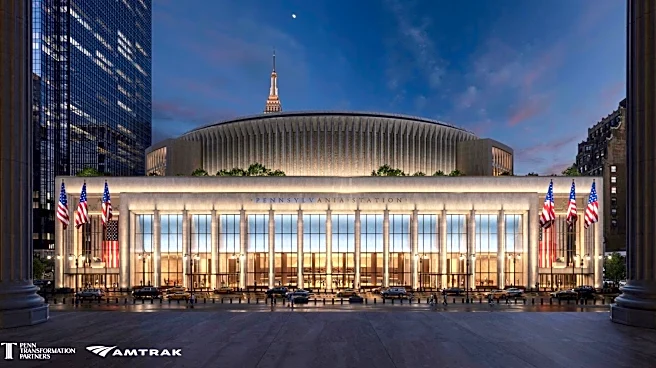
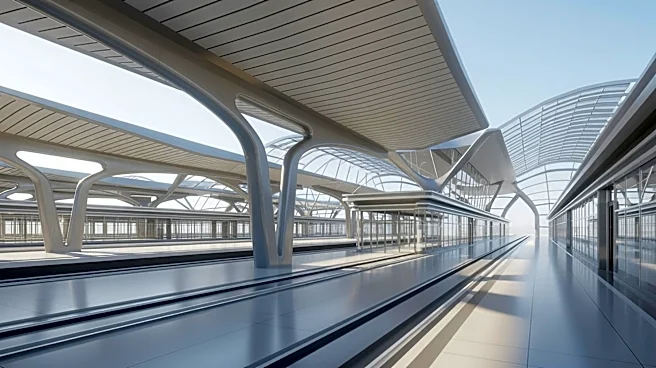
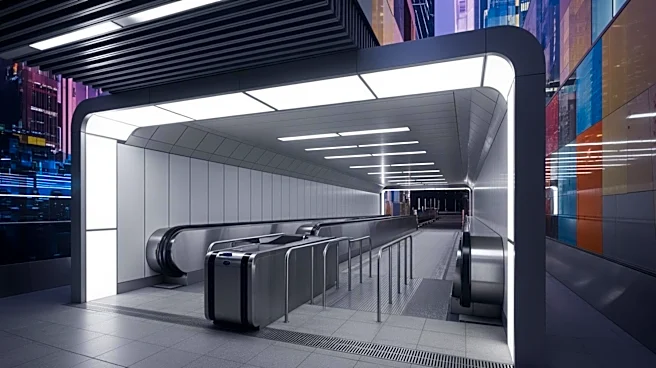
Amtrak has released the first renderings of the new Penn Station, a project led by Penn Transformation Partners, a joint venture between Halmar and Skanska. The redesign aims to transform the current cramped and overcrowded station into a modern, light-filled
civic landmark capable of serving 600,000 daily riders. The project, which could cost up to $8 billion, is expected to begin construction in 2027. The design, crafted by Practice for Architecture and Urbanism (PAU), draws inspiration from the original Penn Station and the Farley Building, incorporating elements of Madison Square Garden into the new structure. The plan includes a 450-foot colonnaded facade and a 50-foot-tall train hall with public spaces, shops, and restaurants. The project will also expand track capacity and improve operational efficiency.
Why It's Important?
The redevelopment of Penn Station is significant as it addresses long-standing issues of overcrowding and inefficiency in one of the busiest transit hubs in the Western Hemisphere. The project promises to enhance the commuting experience for hundreds of thousands of daily riders, potentially boosting economic activity in the area. By preserving elements of the existing structure and integrating modern design, the project aims to restore a sense of dignity and civic pride to train travel in New York City. The involvement of federal grants, loans, and private financing underscores the project's importance to national infrastructure and urban development.
What's Next?
Amtrak plans to start the community engagement process this summer, allowing for public comment on the proposed design. Construction is scheduled to begin in 2027, with the station remaining operational throughout the six-year construction period. The project team, including Skanska, HNTB New York Engineering, and others, will work to meet milestones and secure necessary funding. The transformation of Penn Station is expected to be a major urban development milestone, with potential impacts on regional rail efficiency and urban planning in New York City.