



What's Happening?
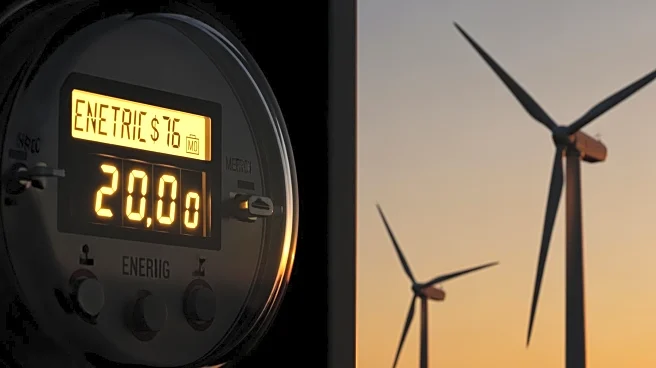
Colorado is undergoing a significant shift in its energy policies, driven by legislation passed since 2019 that emphasizes renewable energy sources. This shift has resulted in a substantial increase in utility rates, with prices rising over 42% between
2019 and 2024. The state's commitment to a 'green agenda' has led to the construction of numerous wind turbines and solar panels, with plans to double these numbers by 2040 to meet mandated goals. However, the transition to renewable energy has been costly, requiring significant material resources and infrastructure investments. The cost of solar-derived electricity in Texas, for example, is reported to be ten times more expensive than natural gas. As a result, Colorado's electricity costs have surpassed those of neighboring states, and the average monthly bill is projected to exceed $600 by 2040.
Why It's Important?
The rising utility costs in Colorado highlight the financial implications of transitioning to renewable energy sources. While the shift aims to reduce greenhouse gas emissions and promote sustainability, it also places a financial burden on residents, particularly the poor and middle class. The increased costs are attributed to the need for extensive infrastructure, backup power systems, and the inherent unreliability of renewable energy sources like wind and solar. This situation underscores the challenges of balancing environmental goals with economic realities, as the state navigates the complexities of energy policy and market dynamics. The outcome of Colorado's energy experiment could influence similar policy decisions in other states, as they weigh the benefits of renewable energy against the economic impact on consumers.
What's Next?
As Colorado continues to implement its renewable energy policies, residents can expect further increases in utility rates. The state will need to address the challenges of integrating renewable energy into the existing grid, including the costs of transmission and distribution infrastructure. Additionally, the disposal of aging wind turbines and solar panels will present future financial and environmental challenges. Policymakers may need to consider adjustments to the current approach to mitigate the economic impact on consumers while still pursuing environmental objectives. The ongoing debate over energy policy in Colorado could lead to legislative changes or new initiatives aimed at balancing sustainability with affordability.