


What's Happening?
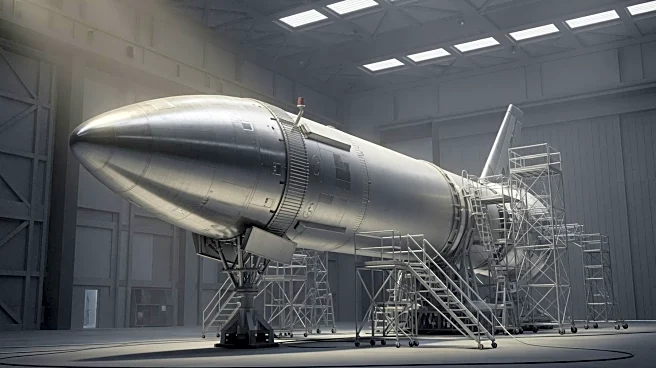
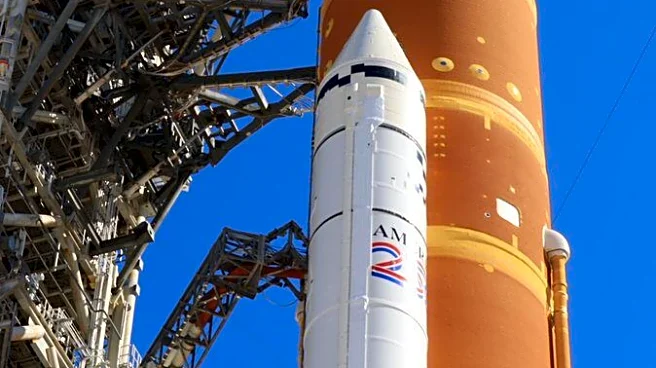
NASA has announced a delay in the Artemis 2 mission, which was set to be the first crewed Moon mission since Apollo 17. The Space Launch System (SLS) rocket and the Orion spacecraft will be moved back to the Vehicle Assembly Building (VAB) due to an unexpected
interruption in the helium supply to the rocket's upper stage. This issue was discovered during routine checks after a successful wet dress rehearsal. Helium is crucial for maintaining pressure in the rocket's fuel tanks, and without it, the fuel cannot flow properly to the engine. Engineers are investigating the problem, focusing on the helium pipes, a control valve, and a filter. The mission, initially planned for March, is now postponed to no earlier than April.
Why It's Important?
The delay of the Artemis 2 mission is significant as it impacts NASA's timeline for returning humans to the Moon, a key goal of the Artemis program. The mission's postponement could affect subsequent missions and the overall schedule of lunar exploration. The issue highlights the technical challenges involved in space exploration and the importance of thorough testing and checks. The delay also underscores the reliance on complex systems and the potential for small issues to cause significant setbacks. The Artemis program is crucial for advancing human space exploration and maintaining U.S. leadership in space.
What's Next?
NASA is aiming for the next launch window from April 1 to April 6, but this depends on the successful resolution of the helium supply issue. Engineers will continue to work on identifying and fixing the problem. The Artemis 2 crew, including Commander Reid Wiseman and Pilot Victor Glover, have been released from quarantine and returned to Houston. NASA plans to hold a media briefing to provide further updates. The mission's success is critical for the future of the Artemis program and the goal of establishing a sustainable human presence on the Moon.