







What's Happening?
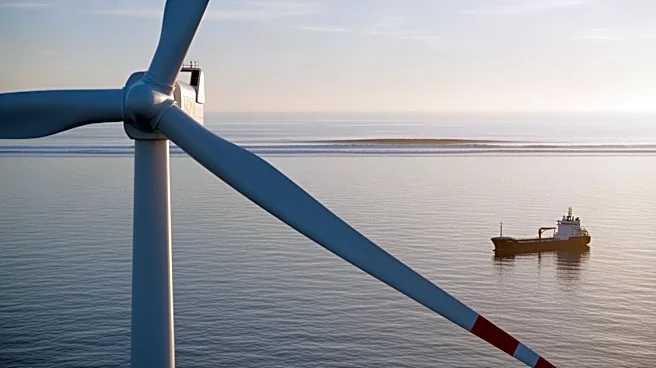
Norway's parliament has mandated a review of the planned subsidy for the country's first commercial floating offshore wind farm. This decision, supported by the Conservative Party, Progress Party, Christian People's Party, and the far-left Red Party, calls
for financial scrutiny of a 35 billion Norwegian crowns ($3.70 billion) subsidy. The minority government aims to support a 500 megawatts (MW) project at Utsira Nord, with two groups cleared to develop projects and compete for subsidies in 2028-2029. The review has raised concerns among investors and industry representatives, as it could halt ongoing and future projects. Energy Minister Terje Aasland criticized the opposition parties, stating that stopping offshore wind investments would result in Norway losing electricity, industrial activity, and jobs. Norway, a major oil and gas producer, is looking to increase its renewable energy output to meet rising demand as industries decarbonize.
Why It's Important?
The review of the wind farm subsidy is significant as it introduces uncertainty into Norway's renewable energy sector, potentially affecting the country's energy transition goals. Norway's push to increase renewable energy output is crucial for meeting the demands of decarbonizing industries. The decision to scrutinize the subsidy could deter investors, impacting the development of offshore wind projects, which are seen as pivotal for transitioning supplier industries from oil and gas. The outcome of this review could influence Norway's ability to meet its renewable energy targets and maintain its position as a leader in energy production. The political dynamics surrounding this decision highlight the challenges in balancing economic interests with environmental goals.
What's Next?
The review process will likely involve detailed financial analysis and debates in parliament, with potential adjustments to the subsidy framework. Stakeholders, including energy companies and environmental groups, may lobby for or against changes to the subsidy. The outcome could set a precedent for future renewable energy projects in Norway and influence investor confidence. The government will need to navigate these challenges to ensure that its renewable energy ambitions are not derailed. The decision could also impact Norway's international reputation as a leader in sustainable energy development.
Beyond the Headlines
The review of the wind farm subsidy reflects broader tensions in Norwegian politics regarding energy policy and economic priorities. It underscores the challenges of transitioning from fossil fuels to renewable energy, particularly in a country heavily reliant on oil and gas. The decision could have long-term implications for Norway's energy strategy and its role in global energy markets. Additionally, it raises questions about the balance between government intervention and market forces in driving the energy transition.