
What's Happening?
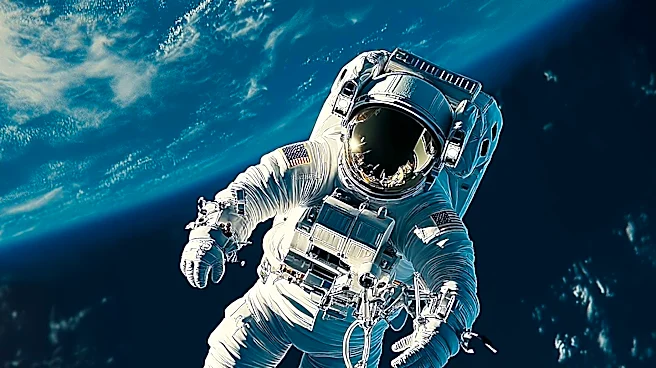
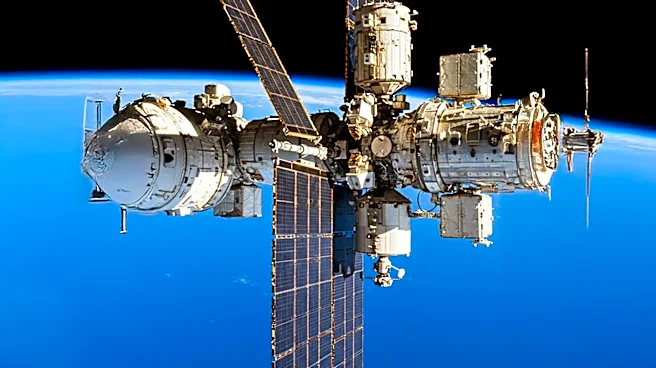
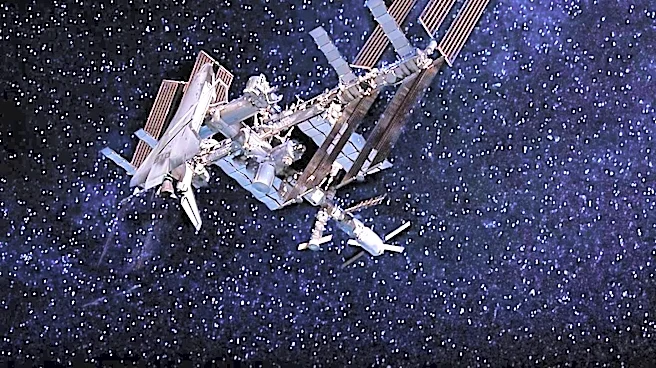
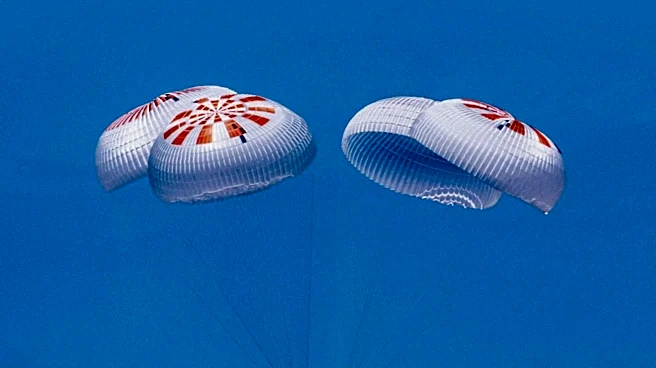
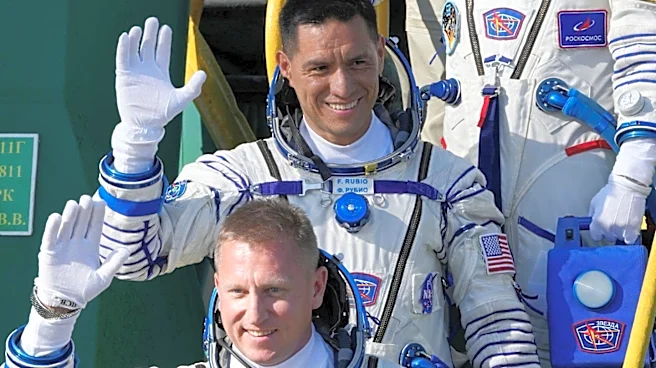
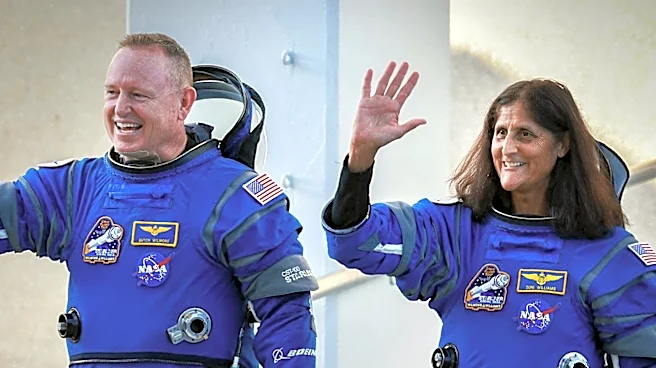
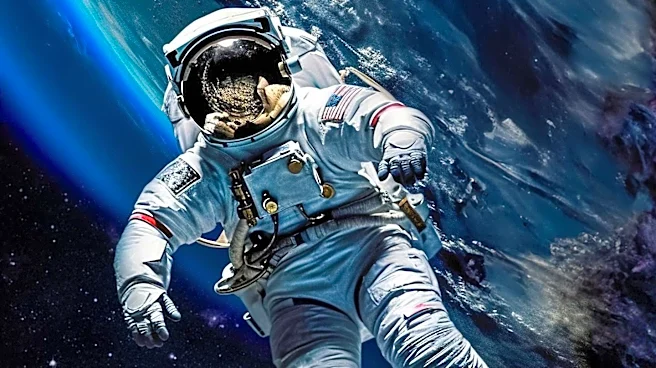
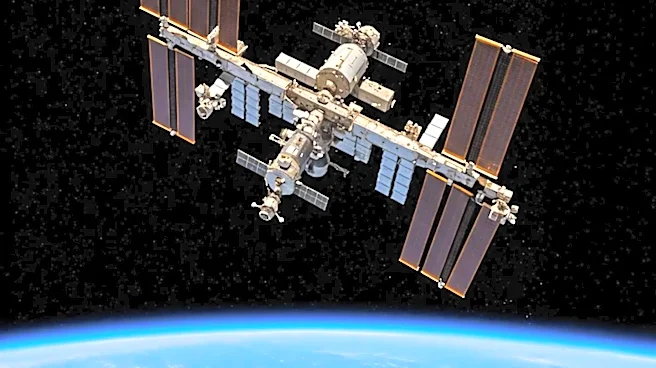
NASA astronaut Chris Williams has returned to Earth after spending 241 days aboard the International Space Station (ISS). Williams, along with two Roscosmos cosmonauts, landed safely on the Kazakh steppe after a mission that included scientific research,
maintenance tasks, and two spacewalks. The mission, which began in November 2025, involved circling the Earth 3,856 times and covering over 102 million miles. Williams' work focused on improving cancer treatments and advancing manufacturing techniques for high-performance materials in microgravity. The mission underscores the ISS's role in preparing for future space exploration beyond low Earth orbit.
Why It's Important?
Williams' mission contributes to the ongoing research and development efforts aimed at enhancing human capabilities in space. The scientific experiments conducted during the mission have potential applications in medicine and technology, offering insights that could lead to advancements in cancer treatment and material science. The mission also highlights the collaborative efforts between NASA and international partners, reinforcing the importance of global cooperation in space exploration. The knowledge gained from such missions is crucial for future endeavors, including potential manned missions to the Moon and Mars, as humanity seeks to expand its presence in space.
What's Next?
Following his return, Williams will undergo routine medical evaluations before heading back to NASA's Johnson Space Center. The data and experiences gathered during the mission will be analyzed to inform future space missions. As the ISS continues to serve as a platform for scientific research and international collaboration, upcoming missions will build on the findings from Williams' expedition. The focus will remain on preparing for more ambitious missions, such as those to the Moon and Mars, with the goal of establishing a sustainable human presence beyond Earth.