

What's Happening?
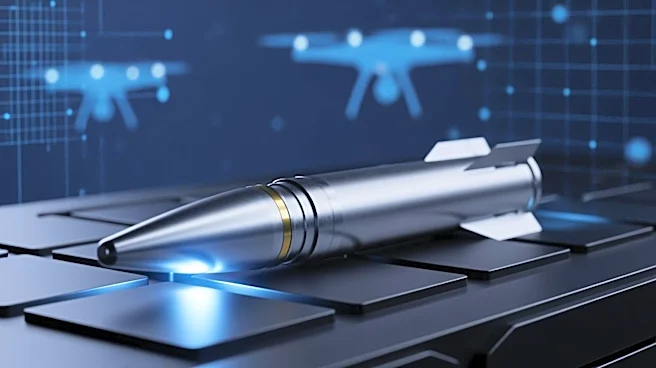
The U.S. military's accelerated efforts to deploy low-cost drones for battlefield use have raised safety concerns, according to an Army explosive safety specialist. A memo obtained by CBS News highlights that the rush to counter unmanned aerial threats
may be compromising basic explosive safety standards, potentially increasing the risk of accidents. The memo, written by a civilian Army employee with extensive experience, warns that the Defense Department's urgency to address drone threats could lead to neglecting established safety protocols. This concern follows an incident where a mini-drone detonated, injuring a Special Forces soldier. The device involved, an XM183 'MiniBlast' pyrotechnic cartridge, is designed to simulate combat conditions but has been assessed as having a medium-level hazard risk. The Army's Combat Capabilities Development Command has not yet provided a 'full material release' for this device, which is a formal safety certification.
Why It's Important?
The safety concerns raised by the Army specialist underscore the potential risks associated with the rapid deployment of new military technologies without thorough safety evaluations. This situation highlights a broader issue within the military's approach to innovation, where the urgency to address emerging threats may overshadow the importance of maintaining rigorous safety standards. The implications are significant for military personnel who may face increased risks during training and operations. Additionally, this development could impact the defense industry's approach to developing and certifying new technologies, potentially leading to stricter safety regulations and oversight. The balance between innovation and safety is crucial for maintaining operational effectiveness and protecting service members.
What's Next?
The Pentagon may need to reassess its current strategies for integrating new technologies, particularly in the realm of unmanned aerial systems. This could involve implementing more stringent safety evaluations and ensuring that all new devices receive a 'full material release' before deployment. The Army's Combat Readiness Center and other safety oversight bodies might play a more active role in reviewing and approving new technologies. Additionally, there could be increased collaboration with defense contractors to address safety concerns and improve the design and testing of new devices. The military's response to these safety warnings will be critical in shaping future policies and practices related to the deployment of new technologies.