







What's Happening?
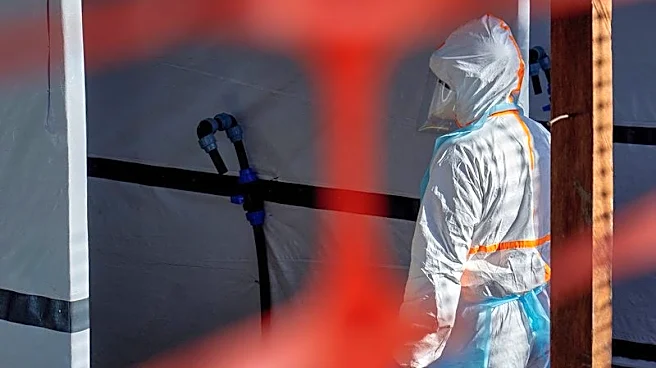
CNN's chief international correspondent, Clarissa Ward, has been reporting from Bunia, the capital of the Ituri Province in the Democratic Republic of Congo, which is currently the epicenter of the latest Ebola outbreak. Ward and her team, the only TV
news organization in the region, have been documenting the efforts of doctors working tirelessly to contain the virus. The outbreak has resulted in 62 deaths and 363 confirmed cases, according to the CDC. Ward's reporting highlights the challenges faced by health workers, including local customs that complicate containment efforts, such as traditional funeral practices. The region has endured 17 Ebola outbreaks, and despite the ongoing conflict and poverty, the resilience of the local population is notable.
Why It's Important?
The Ebola outbreak in the Democratic Republic of Congo poses significant public health challenges, not only for the region but potentially for global health security. The efforts to contain the virus are critical to preventing its spread beyond the region. The situation underscores the importance of international cooperation and support in addressing such health crises. The resilience of the local population, despite decades of conflict and disease, highlights the need for sustained humanitarian and medical assistance. The outbreak also serves as a reminder of the vulnerabilities in global health systems and the necessity for preparedness and rapid response capabilities.
What's Next?
Efforts to contain the Ebola outbreak will continue, with health authorities and international organizations working to implement effective measures. The focus will be on educating the local population about safe practices and overcoming cultural barriers to containment. The international community may increase support and resources to aid in these efforts. Monitoring and surveillance will be crucial to prevent further spread, and the situation will likely remain a priority for global health organizations.