



What's Happening?
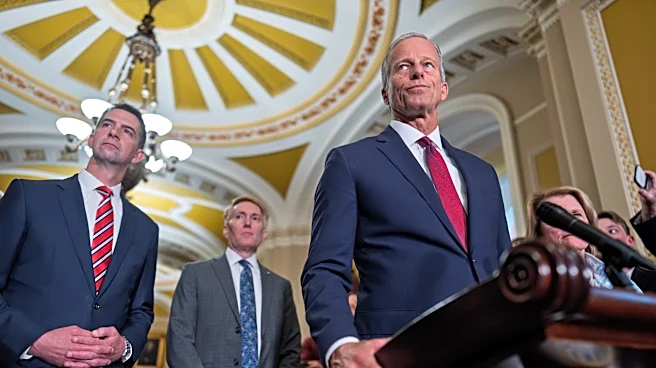
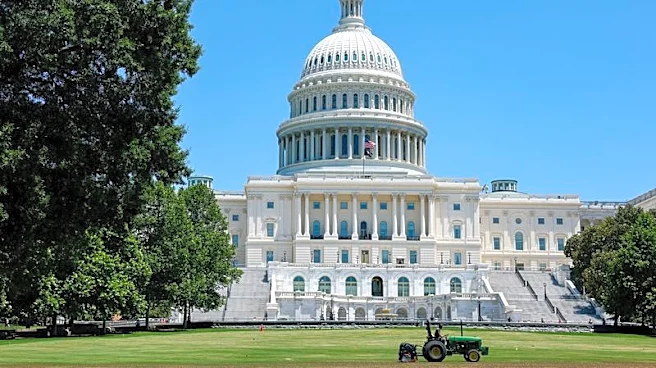
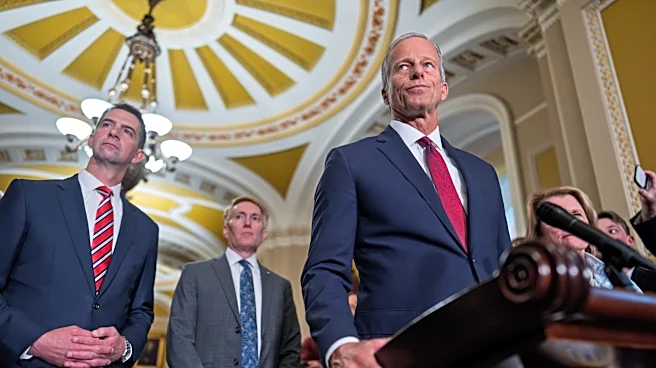
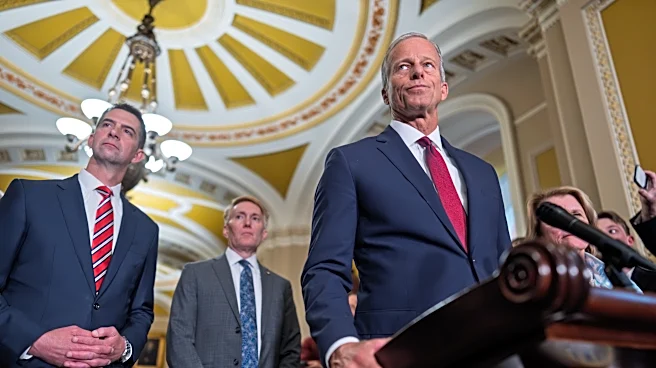
The U.S. Senate has voted 53-46 to advance a $70 billion funding plan for Immigration and Customs Enforcement (ICE) and Customs and Border Protection. This decision sets the stage for a series of amendments to be considered in what is known as a 'vote-a-rama.'
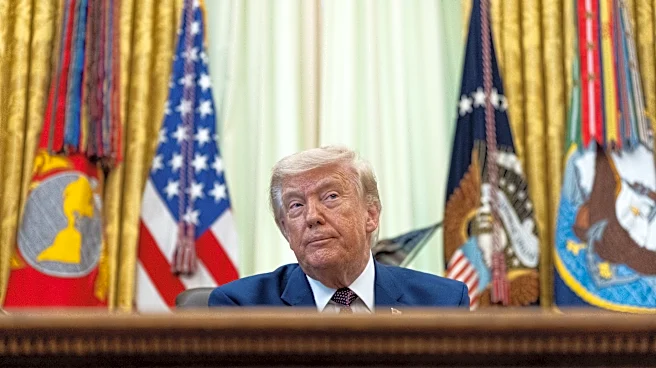
The plan, a priority for the Trump administration, faced potential derailment due to a proposed $1.776 billion settlement fund intended to compensate victims of government weaponization. Critics labeled this fund as a slush fund, leading to significant debate. Senate Majority Leader John Thune emphasized the importance of passing the base bill, while President Trump defended the fund, calling it crucial. The legislation also faced delays due to a $1 billion security funding proposal for the White House, which was eventually removed.
Why It's Important?
The advancement of this funding plan is significant as it underscores the ongoing political battles over immigration and border security in the U.S. The proposed settlement fund has sparked controversy, highlighting tensions between the administration and its critics. The outcome of this legislative process could impact the operational capabilities of ICE and Border Patrol, affecting immigration enforcement and border security. Additionally, the use of budget reconciliation to pass the bill without Democratic support reflects the deep partisan divides in Congress. The decision could set a precedent for future legislative strategies and influence the political landscape ahead of upcoming elections.
What's Next?
The Senate will proceed with a 'vote-a-rama' to consider various amendments, primarily from Democrats seeking to ban the controversial settlement fund. The outcome of these votes will determine the final form of the legislation. If the Senate passes the bill, it will move to the House, where Republican leaders aim to finalize it by the end of the week. The process will test the unity of the Republican caucus and the effectiveness of their legislative strategy. The administration's handling of the settlement fund issue may also influence public perception and political dynamics.