






What's Happening?
South Korea-based STraffic is significantly expanding its presence in the North American public transit market, offering advanced fare collection technology and intelligent transportation systems. The company, a spin-off from Samsung, has a long history
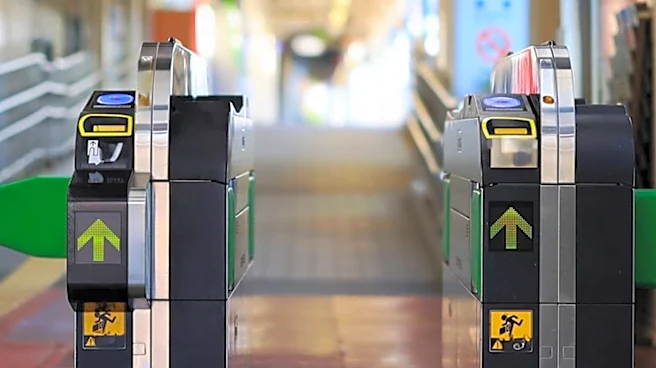
of working with Seoul Metro and has since expanded its operations across Asia, Europe, and North America. STraffic's solutions include automated fare collection, toll collection, platform screen doors, and intelligent transportation systems. Since entering the North American market in 2019, STraffic has partnered with major transit agencies such as the Washington Metropolitan Area Transit Authority (WMATA), Bay Area Rapid Transit (BART), and LA Metro. The company's fare gates are designed to enhance security, reduce fare evasion, and integrate with existing payment infrastructures. STraffic is also exploring new capabilities, including AI-powered cameras for fare evasion detection, enhanced passenger guidance, and more compact gate designs to fit historically significant stations with limited space.
Why It's Important?
STraffic's expansion into the North American market is important because it introduces proven, innovative technology to U.S. public transit systems, which tend to be more conservative in adopting new solutions compared to their South Korean counterparts. The company's ability to integrate with existing infrastructure, rather than requiring complete system overhauls, offers a cost-effective modernization pathway for agencies. The focus on reducing fare evasion, a significant financial drain for many transit authorities, can lead to substantial revenue recovery and improved operational efficiency. Furthermore, the introduction of AI-powered cameras and more adaptable gate designs addresses critical challenges faced by U.S. transit systems, such as security concerns, space constraints in older stations, and the need for more convenient and efficient passenger experiences. This influx of technology can help U.S. transit agencies catch up with global leaders in public transportation innovation.
What's Next?
STraffic is actively working with New York's Metropolitan Transportation Authority (MTA) on a pilot program to test its fare gates at several stations and is among the finalists being considered as a fare gate supplier. This indicates a potential for further significant expansion within the U.S. market. The company plans to continue improving its products based on customer feedback, focusing on AI capabilities, passenger experience enhancements, and adaptable gate designs. As STraffic demonstrates success in reducing fare evasion and improving efficiency, other U.S. transit agencies are likely to consider adopting their technologies. This could lead to a broader modernization trend across the U.S. public transit sector, potentially influencing policy decisions regarding technology adoption and infrastructure investment.
Beyond the Headlines
The entry of companies like STraffic into the U.S. market highlights a fundamental difference in technological adoption rates between U.S. and international public transit systems. The U.S. market's conservatism, as noted by STraffic's Associate Director John Moon, suggests underlying challenges such as bureaucratic hurdles, funding complexities, and a fragmented regulatory landscape. The success of STraffic's integrated solutions could pressure U.S. agencies to overcome these barriers and embrace more rapid technological advancements. This could also spark a broader discussion about the role of public-private partnerships in modernizing critical infrastructure and the potential for international collaboration to drive innovation. Ultimately, the long-term impact could be a more efficient, secure, and user-friendly public transit experience for millions of Americans, while also fostering a more competitive market for transit technology providers.