




What's Happening?
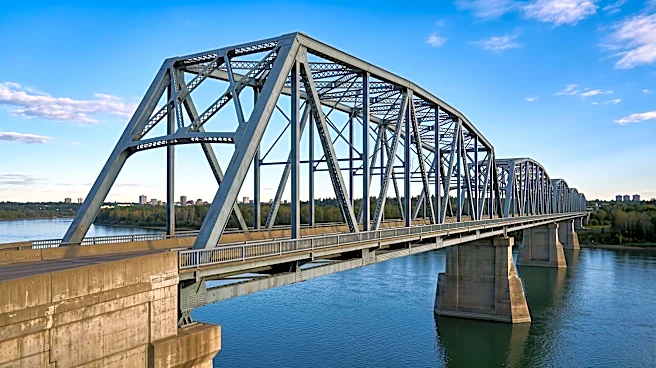
The Queen City Bridge in Manchester, New Hampshire, which carries Route 3 over the Merrimack River, has reopened to traffic. The bridge was previously closed on Monday by the state Department of Transportation after a routine inspection identified possible
structural deficiencies, including rust and a cracked truss. Manchester Director of Public Works Tim Clougherty stated on Thursday evening that additional testing was conducted to ensure the bridge's condition was fully clear before it was reopened to both vehicles and pedestrians. The bridge serves as a vital artery connecting the east and west sides of Manchester.
Why It's Important?
The temporary closure and subsequent reopening of the Queen City Bridge highlight the ongoing challenges and critical importance of maintaining aging infrastructure in the U.S. The identification of structural deficiencies like rust and a cracked truss underscores the need for continuous monitoring and timely repairs to ensure public safety. For Manchester, the bridge's closure caused significant disruption, impacting daily commutes and local commerce due to its role as a major connector. Its reopening is crucial for restoring normal traffic flow and economic activity in the city. This event also serves as a reminder of the proactive measures taken by state and local authorities to address potential hazards before they lead to more severe consequences, emphasizing the value of routine inspections and safety evaluations.
What's Next?
While the Queen City Bridge has reopened, the identification of rust and a cracked truss during a routine inspection suggests that ongoing monitoring and potential future repair work will be necessary. The state Department of Transportation and Manchester's Department of Public Works will likely continue to assess the bridge's condition and plan for long-term maintenance or rehabilitation projects. This incident may also prompt a review of inspection protocols and funding for infrastructure maintenance across New Hampshire. For the public, the reopening means a return to normal commuting patterns, but awareness of the bridge's structural history may lead to increased public interest in infrastructure spending and safety.
Beyond the Headlines
The Queen City Bridge incident reflects a broader national issue concerning the state of aging infrastructure. Many bridges and roadways across the U.S. are decades old and require significant investment for repair and modernization. The discovery of structural deficiencies, even if not immediately critical, points to the cumulative effect of wear and tear and the potential for widespread infrastructure challenges. This situation could influence public policy discussions on federal and state funding for infrastructure projects, emphasizing preventative maintenance over reactive repairs. It also highlights the often-unseen work of public works departments and engineers in ensuring the safety and functionality of essential transportation networks, a task that is vital for economic stability and public well-being.