

What's Happening?
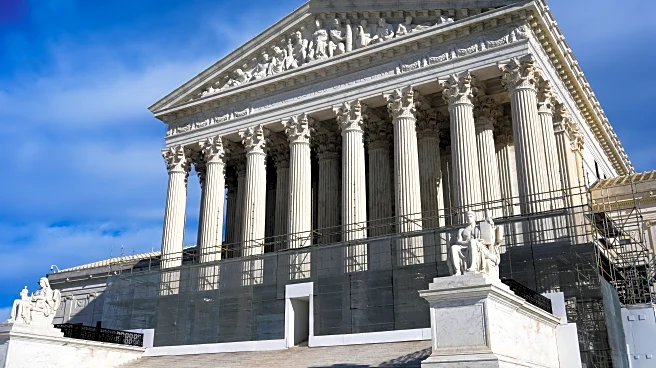
The European Commission has called on the United States to adhere to the terms of a trade deal established last year, following the U.S. Supreme Court's decision to strike down President Trump's global tariffs. In response to the ruling, President Trump announced
new temporary tariffs of 10%, which were subsequently increased to 15%. The European Commission, representing the 27 EU member states, insists that the U.S. must provide 'full clarity' on its future trade actions. The Commission emphasized that the current situation is not conducive to achieving 'fair, balanced, and mutually beneficial' transatlantic trade and investment, as previously agreed. The EU is particularly concerned about maintaining competitive treatment for its products without any tariff increases beyond the agreed ceiling.
Why It's Important?
This development is significant as it highlights ongoing tensions in transatlantic trade relations, which could impact global markets. The EU's demand for clarity underscores the importance of stable and predictable trade policies for international economic cooperation. The imposition of new tariffs by the U.S. could lead to retaliatory measures from the EU, potentially escalating into a trade conflict that might disrupt supply chains and affect industries on both sides of the Atlantic. The situation also reflects broader challenges in maintaining international trade agreements amidst shifting political and economic landscapes.
What's Next?
The U.S. administration is expected to clarify its trade policy direction following the Supreme Court's ruling. The EU will likely continue to engage in diplomatic discussions to ensure that the terms of the existing trade agreement are upheld. Any failure to reach a consensus could lead to further legal or economic actions by the EU. Businesses and industries affected by the tariffs will be closely monitoring these developments, as they could influence future trade strategies and market conditions.